
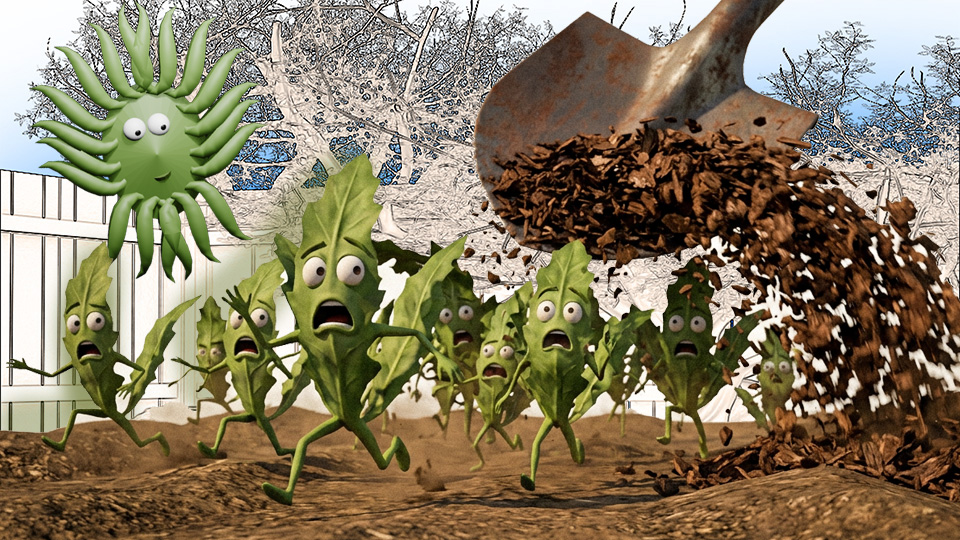
Most weed control strategies require effort: pulling, hoeing, spraying, digging. Mulch requires you to put material on the ground once and then do something more enjoyable with your time while the mulch does the work.
Mulch is not the most exciting gardening topic. It just happens to be one of the most effective ones. A properly mulched garden has significantly fewer weeds than an unmulched garden, retains moisture, regulates soil temperature, and improves soil structure as it decomposes.
Here’s why mulch works, what to use, and how to apply it correctly — because doing it wrong is surprisingly common and remarkably easy to avoid.
🤔 Why Mulch Stops Weeds
Weed seeds need light to germinate. Most weed seeds in the soil are waiting for exposure to light before they activate. A layer of mulch blocks that light.
The mechanism: two to three inches of mulch prevents the majority of weed seeds from receiving the light trigger they need. Seeds that do germinate under mulch run out of energy before reaching the surface. The mulch layer is a darkness barrier that the seed bank cannot penetrate.
What mulch cannot do: stop established weeds that were already in the ground before mulching, or weeds that blow in from outside and land on top of the mulch. It prevents germination from the soil seed bank, not from above-ground seed arrival.
🌿 What to Use
- Straw. Lightweight, easy to apply, cheap, decomposes in one season and improves soil. Excellent for vegetable gardens. Make sure it’s straw (hollow stems from grain crops) not hay (contains seeds) — hay mulch introduces exactly the weed problem you’re trying to prevent.
- Wood chips. Longer-lasting than straw, excellent for paths and permanent beds, attractive. Use only composted or aged chips in vegetable beds — fresh wood chips can tie up soil nitrogen as they decompose. For ornamental beds and paths, fresh chips are fine.
- Shredded leaves. Free if you have trees. Excellent mulch material that decomposes to add organic matter to the soil. Shred before using — whole leaves can mat together and repel water.
- Compost. Doubles as mulch and soil amendment. Apply two to three inches over beds in spring. As it works into the soil it feeds the plants it’s protecting from weeds.
- Newspaper or cardboard. The kill mulch for starting new beds or suppressing persistent weeds. Lay several layers, wet thoroughly, cover with another mulch material. Blocks light completely and smothers established weeds as it decomposes.
🚧 What Not to Use
- Hay. Full of seeds. Mulching with hay is planting next year’s weeds.
- Rubber mulch. Made from recycled tires. Does not decompose, does not improve soil, can leach chemicals. Appropriate for playgrounds. Not for gardens.
- Fresh wood chips directly against plant stems. Creates humid conditions that encourage rot and disease at the soil line. Keep mulch a few inches away from plant stems and tree trunks.
📏 How Much to Apply
Two to three inches is the effective depth for weed suppression. Less than two inches and light penetrates. More than three inches in vegetable beds and moisture and air exchange to roots can be affected.
Apply around plants, not touching the stems. Leave a gap of a few inches around each plant base. Replenish as the mulch decomposes — once per season in most cases.
🛒 Mulch Worth Having
- Straw bale for garden mulch — The ideal vegetable garden mulch. Easy to spread, decomposes to improve soil, effective weed suppression.
- Shredded hardwood mulch — For ornamental beds and paths. Longer-lasting than straw, attractive, effective.
- Cardboard for kill mulching — For smothering established weeds or starting new beds. Layer under other mulch for complete light blocking.
As an Amazon affiliate, I earn from each qualifying purchase. Thank you for supporting TangleWicket.
✨ The Short Version
Mulch blocks light. No light means no germination. Two to three inches of the right material suppresses the majority of weeds from the soil seed bank while retaining moisture and improving soil.
Use straw in vegetable beds. Wood chips in ornamental beds and paths. Cardboard under everything for kill mulching problem areas.
Tom Brownthumb mulched his beds for the first time in year three. His weeding time in year four dropped by roughly eighty percent. He uses a lot of straw now.
📚 Related Reads
- Why Weeds Win — and How to Actually Stop Them
- Why Pulling Weeds Makes More Weeds
- Ground Cover Plants That Do Your Weeding For You
TangleWicket is part of the WhistleBump group – find the rest of the family at WhistleBump.com.
34005
©2026 John D Reinhart/Tanglewicket.com – all rights reserved