
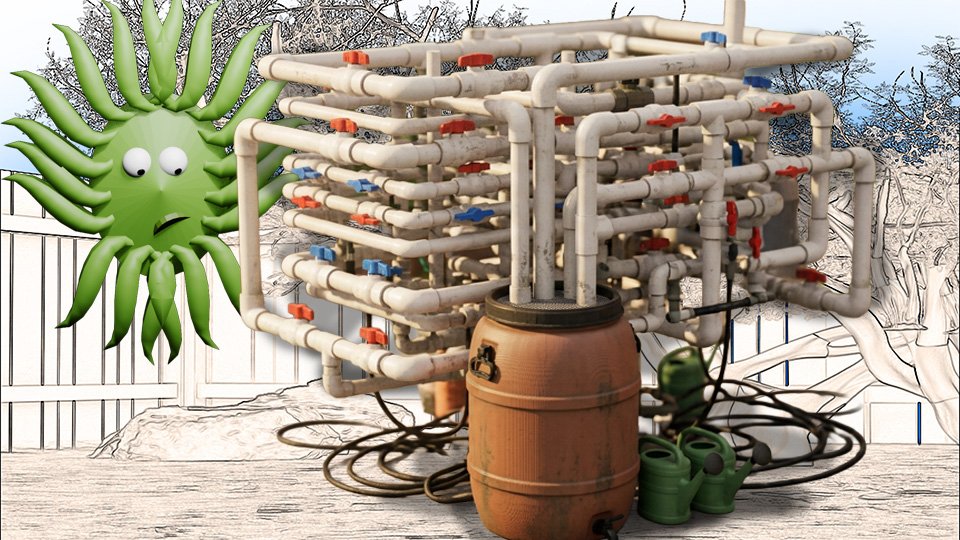
Every time it rains, your roof collects an impressive volume of free water and sends it down the downspout, through the storm drain, and away. A rain barrel intercepts that water, stores it, and makes it available for your garden.
A basic rain barrel system is not complicated. It is one barrel, one downspout diverter, and one spigot. It takes an afternoon to set up, costs fifty to a hundred dollars in materials, and produces free garden water for the life of the barrel.
Here’s how to build a simple system — what you need, how it works, how much water you can realistically collect, and the few limitations worth knowing about.
💧 How Much Water You Can Collect
The math is more impressive than you’d expect. One inch of rainfall on a thousand square feet of roof produces approximately 600 gallons of water. A typical house with 1500 square feet of roof area and several downspouts generates thousands of gallons of collectable water per year.
A standard 55-gallon rain barrel fills quickly. A moderate rainstorm can fill a single barrel in minutes. This is why more serious rain harvesting systems use multiple barrels linked together or larger cisterns.
For the beginner, a single 55-gallon barrel is the starting point. It won’t water your entire garden through a drought, but it handles routine supplemental watering and reduces your water bill meaningfully over a season.
🔧 The Basic System Components
- The barrel. A 55-gallon food-grade drum is the standard. Used barrels that previously held food products (olive oil, juice, food-grade chemicals) are safe for garden water collection. Dedicated rain barrel products are also available and include all necessary hardware.
- Downspout diverter. Installs in the downspout and redirects water into the barrel when it’s collecting, bypasses to the downspout when the barrel is full. Keeps the system from overflowing onto your foundation when the barrel capacity is reached.
- Overflow hose. Directs overflow away from the house foundation. Even with a diverter, excess water needs a place to go that isn’t the side of your house.
- Spigot at the base. Allows you to connect a hose or fill a watering can. Positioned at the bottom of the barrel for gravity flow.
- Screen or mesh over the inlet. Keeps mosquitoes from breeding in the standing water and debris from entering the barrel.
🚧 Installation
Elevate the barrel on cinder blocks or a dedicated stand. Elevation increases water pressure from the spigot — a barrel sitting on the ground produces almost no pressure. Twelve to eighteen inches of elevation produces enough flow to fill a watering can easily.
Cut the downspout at the right height for your diverter. Install the diverter per its instructions. Connect the inlet hose to the barrel. Install the overflow hose. Fill the barrel’s inlet hole with mesh screen. Done.
The whole installation takes two to three hours with basic tools. No plumbing knowledge required.
🚧 What Rain Barrels Can’t Do
- Supply adequate pressure for drip systems. Gravity-fed rain barrel pressure is low — typically less than one PSI. This is enough for a watering can or gentle hose flow but not enough to run a drip irrigation system at the pressure it requires. Drip systems need household water pressure.
- Cover drought-level demand. One barrel is supplemental, not a complete replacement for municipal water during extended dry periods. For more significant water independence, multiple linked barrels or a larger cistern is needed.
- Collect potable water. Rain barrel water is appropriate for gardens and lawns, not for drinking. Roof runoff collects contaminants from shingles, gutters, and atmospheric pollutants. Fine for plants, not for people.
💰 The Economics
A fifty-dollar rain barrel setup that collects 200 gallons of rain per month during the growing season saves roughly 600 gallons per season. At typical municipal water rates, that’s a modest but real saving. In areas with water restrictions or high water costs, the savings are more significant.
The real value is less the water bill and more the availability. Rain barrel water is available during hose restrictions and dry spells, from a source that replenishes itself without billing you.
🛒 What to Buy
- Complete rain barrel kit — Includes barrel, diverter, overflow, spigot, and instructions. The lowest-friction way to start a rain collection system.
- Downspout diverter (standalone) — For adding to an existing barrel setup or replacing a failed diverter.
- Rain barrel stand — Elevates the barrel for improved pressure. More stable than cinder blocks and purpose-built for the load.
- Linking kit for multiple barrels — For connecting two or more barrels to increase storage capacity. The natural next step once the single-barrel system is working.
As an Amazon affiliate, I earn from each qualifying purchase. Thank you for supporting TangleWicket.
✨ The Short Version
A rain barrel collects free water from your roof and stores it for garden use. It takes an afternoon to install, costs fifty to a hundred dollars, and produces supplemental water for the life of the barrel.
One barrel is the starting point. Elevation improves pressure. Overflow management protects the foundation. Screen keeps mosquitoes out.
Tom Brownthumb installed a rain barrel and then watched it fill during the first storm with unreasonable satisfaction. Free water. Every rainstorm. It remains one of his better afternoons.
📚 Related Reads
- How Much Water Does a Garden Actually Need?
- Rain Gauges: The Cheapest Tool That Tells You the Most
- Soaker Hoses: The Lazy Gardener’s Best Friend
TangleWicket is part of the WhistleBump group – find the rest of the family at WhistleBump.com.
32010
©2026 John D Reinhart/Tanglewicket.com – all rights reserved