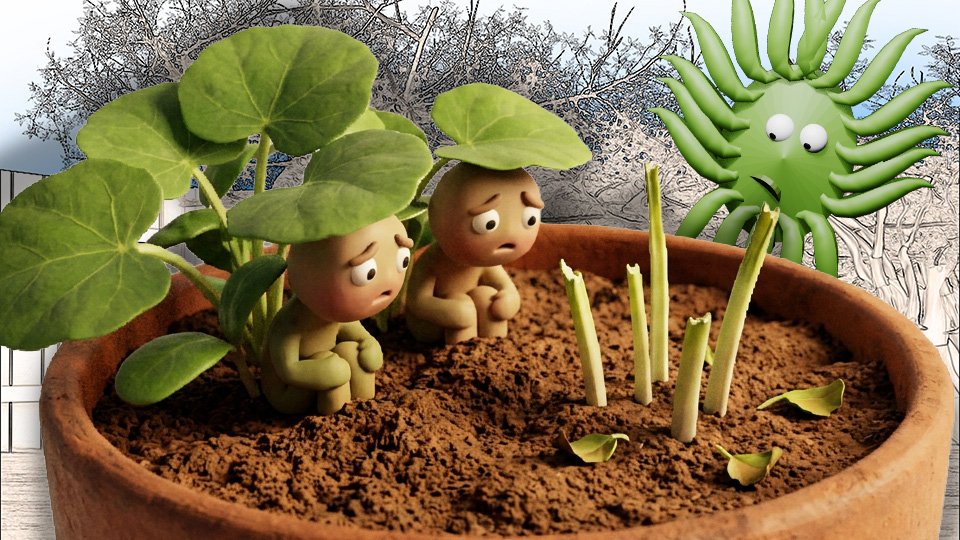
You planted seeds. They germinated. Several of them germinated. In fact, too many of them germinated, and now you have a dense thicket of tiny seedlings where the packet said you’d have nicely spaced plants.
The instructions say to thin them. This means removing seedlings so the survivors have enough space to grow properly. You are being asked to pull out and discard plants that you successfully grew from seed, which feels like a betrayal of everything you worked for.
It is not a betrayal. It is the thing that makes the remaining plants actually work. Thinning is as important as planting, and skipping it produces worse results than if you’d planted fewer seeds to begin with.
🤔 Why Crowding Hurts Plants
Plants need space for reasons that are physical, not emotional. Crowded plants compete for three things:
- Light. Each plant needs direct access to sunlight. Crowded plants shade each other. Shaded plants reach and stretch trying to find light, producing weak, leggy growth. The competition is happening below the soil too.
- Water and nutrients. Roots compete in the same soil. Crowded roots mean each plant gets less of both. Nutrient-deficient plants are smaller, less productive, and more susceptible to disease and pests.
- Air circulation. Crowded plants don’t get adequate airflow. Poor airflow leads to fungal problems — mildew, botrytis, damping off. Spacing prevents disease.
The packet’s spacing recommendation exists because someone grew that plant at various densities and determined the minimum space each one needs to perform well. It is not arbitrary.
✂️ How to Thin Without Agony
Wait until seedlings have their first true leaves — the second set of leaves, which look like the plant’s actual leaves rather than the rounded seed leaves (cotyledons) that appear first. True leaves mean the plant is established enough to assess.
Choose the strongest, healthiest seedling in each spacing zone to keep. Remove the others. Use scissors to snip them at soil level rather than pulling them out — pulling can disturb the roots of neighboring seedlings you’re keeping.
The emotional compromise: many thinned seedlings can be eaten. Carrot thinnings are edible. Lettuce thinnings are essentially microgreens. Beet thinnings are delicious sautéed with butter. You’re not wasting them — you’re harvesting early.
📏 Spacing Reference
- Carrots: thin to 2-3 inches apart.
- Beets: thin to 3-4 inches apart.
- Lettuce: thin to 6-8 inches for full heads, 4 inches for leaf lettuce.
- Radishes: thin to 2 inches apart.
- Kale and chard: thin to 12-18 inches apart.
- Beans: thin to 4-6 inches apart.
The seed packet spacing applies here. When in doubt, check the packet.
🛒 Tools That Help
- Micro-tip scissors — For snipping thinned seedlings cleanly at soil level without disturbing neighbors. More precise than fingers, less disruptive than pulling.
- Ruler or spacing tool — For checking actual spacing against the recommended distance. Easier than estimating by eye.
As an Amazon affiliate, I earn from each qualifying purchase. Thank you for supporting TangleWicket.
✨ The Short Version
Thinning is not failure. It is the step that turns a crowded mess into a productive garden. Plants need space for light, water, nutrients, and airflow. Crowded plants get none of those things adequately.
Snip at soil level. Keep the strongest seedling. Eat the ones you remove if they’re edible.
Tom Brownthumb once refused to thin his carrots. He grew a very enthusiastic ball of orange confusion.
📚 Related Reads
- Seeds vs. Seedlings: Which Should a Beginner Buy?
- Why Your Seeds Aren’t Germinating
- Reading a Seed Packet Without Glazing Over
TangleWicket is part of the WhistleBump group – find the rest of the family at WhistleBump.com.
30009
©2026 John D Reinhart/Tanglewicket.com – all rights reserved