
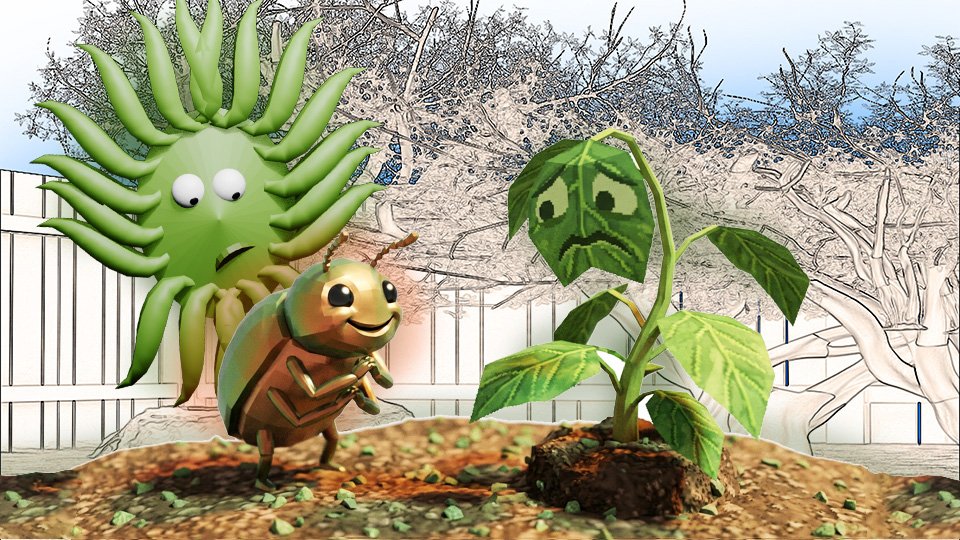
Japanese beetles are among the most infuriating garden pests in the northeastern United States, and they have the nerve to be quite attractive. Metallic green thorax, copper wing covers, iridescent in direct sun. They look like something you’d find in a natural history museum display. They eat like they haven’t had a meal in weeks.
They skeletonize leaves by eating the tissue between the veins, leaving behind a brown lacework that eventually dies. They eat flowers. They eat fruit. A large population can defoliate a susceptible plant in days.
Here’s the honest guide to Japanese beetle management — what works, what doesn’t, and why the yellow trap you bought is almost certainly making things worse.
🤔 The Biology
Japanese beetles spend most of their life underground. Adults emerge in early summer — typically late June through August in the Northeast — feed voraciously for six to eight weeks, mate, and lay eggs in the soil. Those eggs hatch into grubs that spend the rest of the year underground eating grass roots before pupating and emerging as next year’s beetles.
Why they’re hard to control: the adult population in your garden is not just your beetles. Japanese beetles fly up to five miles and are attracted by the pheromones and plant volatiles released by beetles already feeding. A heavily infested plant is actively attracting more beetles from the surrounding area. Population management at the individual property scale is genuinely difficult.
❌ The Japanese Beetle Trap Problem
Japanese beetle traps — the yellow bag-style traps that use pheromone and floral lure — are effective at capturing Japanese beetles. They are so effective that they attract far more beetles to your property than would otherwise be there, and the traps do not capture all of them.
The research consistently shows: properties with Japanese beetle traps have more beetle damage than properties without them. The traps attract beetles from a wide area. Beetles land on nearby plants before reaching the trap. You have spent money to increase your beetle problem.
If you use traps, place them at the far edge of your property — as far from any plants you care about as possible. Do not place them near the garden.
✅ What Actually Works
- Hand picking. In the morning when beetles are sluggish from the cool, drop them into a bucket of soapy water. Tedious, effective, and free. A daily morning round during peak season removes a significant portion of the feeding population.
- Neem oil. Applied to plant foliage, neem oil deters feeding and disrupts the beetle’s life cycle. It does not kill on contact but reduces feeding damage meaningfully when applied consistently.
- Row covers. Lightweight fabric covers that exclude beetles physically. Highly effective for protecting specific plants during the six to eight week adult season. Must be removed for pollination on flowering vegetables.
- Milky spore. A biological control containing Bacillus popilliae, a bacterium that infects and kills Japanese beetle grubs in the soil. Applied to lawns, it reduces the grub population that produces next year’s adults. Takes two to three years to establish but provides long-term population reduction.
- Nematodes. Beneficial nematodes applied to soil target Japanese beetle grubs. More immediate than milky spore, less persistent. Applied in late summer when young grubs are near the surface.
🌿 Plant Selection as Long-Term Strategy
Japanese beetles have preferred plants and plants they largely ignore. Roses, raspberries, grapes, and linden trees are heavily targeted. Boxwood, forsythia, holly, and most conifers are largely left alone.
For gardeners in heavily infested areas, plant selection is the long-term strategy. Replacing heavily targeted ornamentals with less-preferred species reduces feeding pressure without ongoing control effort.
🛒 The Control Kit
- Neem oil concentrate — For foliar deterrent application. Reduces feeding damage on affected plants.
- Row cover fabric — Physical exclusion during the adult season. The most reliable protection for high-value plants.
- Milky spore powder — Long-term grub management applied to turf. Two to three year establishment, then persistent population reduction.
- Beneficial nematodes — For grub control in the soil. Apply in late summer when grubs are young and near the surface.
As an Amazon affiliate, I earn from each qualifying purchase. Thank you for supporting TangleWicket.
✨ The Short Version
Japanese beetles are hard to control at population scale. The traps make the problem worse. Hand pick in the morning. Use neem oil and row covers to protect specific plants. Apply milky spore or nematodes for long-term grub reduction. Consider plant selection as the genuine long-term strategy.
They will always be there. The goal is keeping the damage at a tolerable level.
Tom Brownthumb bought a Japanese beetle trap and placed it next to his rose bushes. This was not his finest garden decision. The trap has been relocated to the far edge of the property. The rose bushes have not recovered their dignity.
📚 Related Reads
- Good Bugs vs. Bad Bugs: How to Tell the Difference
- When to Use Pesticide and When to Leave It Alone
- Why You Shouldn’t Kill Every Bug You See
TangleWicket is part of the WhistleBump group – find the rest of the family at WhistleBump.com.
35010
©2026 John D Reinhart/Tanglewicket.com – all rights reserved