
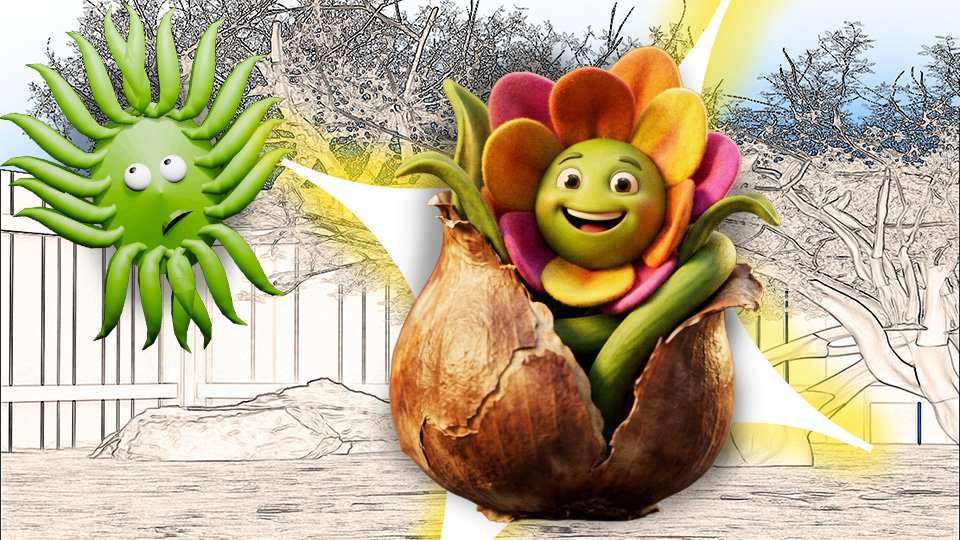
Where a seed is a promise, a bulb is a contract.
Inside a flower bulb is a complete plant in miniature — the flower, the leaves, the stem, the nutrients to fuel its first season of growth — all coiled up and waiting. You put the bulb in the ground, you water it, and it does the rest. It is, in terms of gardening difficulty, about as close to a guaranteed outcome as horticulture offers.
This is why bulbs are the beginner’s best friend. They are nearly impossible to mess up.
🌱 What a Bulb Actually Is
A bulb is an underground storage organ — a modified stem or leaf base that the plant uses to store energy over a dormant period. When conditions are right (temperature, moisture, day length), the plant draws on that stored energy to push up through the soil and bloom.
The classic bulbs — tulips, daffodils, hyacinths — are spring-blooming. You plant them in fall, they sit dormant over winter, and they emerge in spring with all the energy they need to bloom already on board. You are essentially pre-loading a plant.
Summer-blooming bulbs — dahlias, gladiolus, lilies — are planted in spring and bloom through summer and early fall. Same principle, different calendar.
📐 The One Thing You Need to Get Right: Depth
The general rule is to plant a bulb at a depth of two to three times its diameter. A large tulip bulb gets planted six inches deep. A small crocus bulb gets planted three inches deep. Err on the side of deeper rather than shallower — a bulb planted too shallow is at the mercy of temperature fluctuations and sometimes gets pushed up by freeze-thaw cycles.
The pointed end goes up. This sounds obvious but it is the mistake that gets made. Flat side down, pointed side up.
After that, water it in and leave it alone. The bulb will find its way.
🌼 Why Daffodils Are the Most Beginner-Friendly
Tulips are beautiful and somewhat fussy over the long term — they sometimes decline in bloom quality after a few years without specific care. Daffodils are not fussy. Daffodils multiply. They naturalize, which means they spread slowly on their own over years, and a small planting becomes a larger one without any intervention from you.
Also: deer don’t eat daffodils. This is a significant advantage in many gardens. Deer will eat almost anything, but they have strong opinions about daffodils, and those opinions are negative. Plant accordingly.
🌸 Summer Bulbs Worth Knowing
Dahlias are the summer equivalent of tulips — spectacular, worth the effort, slightly more work than a wildflower seed packet. They need staking when they get tall and they’re not frost-hardy, so you either treat them as annuals or dig them up in fall and store them. The blooms are extraordinary. Tom Brownthumb thinks they’re worth it.
Gladiolus are easier. Tall, dramatic flower spikes, plant them in spring, enjoy them in summer. They’re also not frost-hardy but they’re cheap enough to treat as annuals.
Lilies — true lilies, not daylilies — are perennial, fragrant, and largely trouble-free once established. A good investment.
🛒 Gear Worth Having
WeGarden 32 Mixed Flower Bulbs for Spring Planting — Dahlia, gladiolus, lily, Dutch iris, and freesia. Pre-planned layered design. A full summer’s worth of blooms in one purchase.
Complete Spring & Summer 100 Bulbs Collection — 100 bulbs, 4 varieties, pollinator-friendly. Beginner-friendly and genuinely easy to grow.
Complete Spring Flower Garden — 50 Fresh Bulbs (Tulips, Daffodils, Gladiolus) — A curated mix from a family farm in Iowa. Blooms from early spring through summer.
As an Amazon affiliate, I earn from qualifying purchases. Thank you for supporting TangleWicket.
📖 Related Reads
- Starting a Garden From Scratch: What Goes in the Ground First
- Seeds vs. Seedlings: Which Should a Beginner Buy?
- How Deep Is Deep Enough? Planting Depth Explained
TangleWicket is part of the WhistleBump group – find the rest of the family at WhistleBump.com.
36005
©2026 John D Reinhart/Tanglewicket.com – all rights reserved