
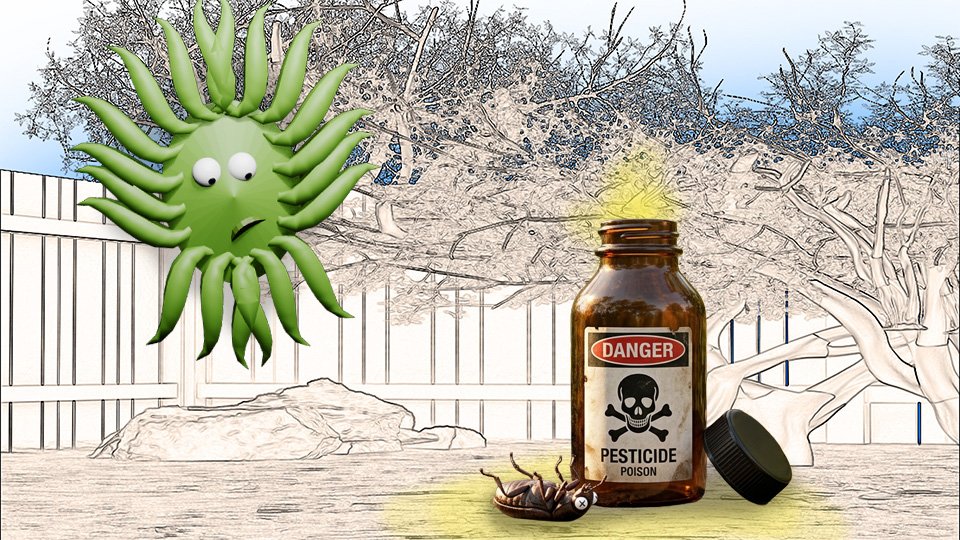
The question is not “What pesticide should I use?” The question is “Should I use a pesticide at all?”
Most garden pest situations do not require pesticide application. Most are handled by the garden’s natural predator population, by mechanical means, or by doing nothing and waiting. Pesticide is the appropriate response in a specific subset of situations, and using it outside that subset creates problems it was supposed to solve.
Here’s the framework for making that decision correctly.
🚫 When to Leave It Alone
- Small, stable populations with predators present. A few aphids with ladybugs nearby. A caterpillar with parasitic wasp cocoons on its back. The ecosystem is working. Adding pesticide disrupts it.
- Cosmetic damage without productivity loss. Holes in leaves, minor discoloration, a few chewed edges. Plants can sustain substantial leaf damage without reduced yields. Cosmetic damage is not a pest crisis.
- Late in the season. A pest infestation in late August on a plant that has already produced its main crop has limited opportunity to cause meaningful harm. The cost-benefit of treatment is low.
- When you haven’t identified the pest. Treating an unknown insect with a broad-spectrum pesticide is guesswork with collateral damage. Identify first.
✅ When Pesticide Is Appropriate
- Rapidly growing populations threatening plant productivity. An aphid infestation that has tripled in a week on a young seedling. A slug population destroying the seedling bed. A cutworm taking plants overnight.
- High-value plants with no natural control in sight. A fruit tree with a scale infestation building with no predators present. A late-season tomato crop with spider mites in damaging numbers.
- Pests that don’t respond to mechanical methods. Spider mites that have returned after repeated water blasting. Slugs in populations too large for trapping and handpicking alone.
🌿 The Pesticide Spectrum: Least to Most Harmful
- Physical barriers (not pesticides). Row covers, copper tape, cutworm collars. Zero chemical impact. First response.
- Insecticidal soap. Kills soft-bodied insects on contact. Breaks down quickly. Minimal impact on beneficials if applied carefully (avoid open flowers and known beneficial habitats). The correct escalation step after physical methods.
- Neem oil. Disrupts insect feeding and reproduction. Organic, OMRI-listed. Apply at dusk to minimize pollinator contact. More persistent than soap, still relatively low-impact.
- Pyrethrin (organic) or permethrin (synthetic). Broad-spectrum. Effective on a wide range of insects including beneficials. Reserve for significant infestations. Do not apply when pollinators are active.
- Systemic insecticides (imidacloprid, etc.). Absorbed into plant tissue. Kills any insect feeding on the plant, including pollinators on flowers. Last resort. Never on flowering plants.
🛒 The Minimal-Impact Pest Kit
- Insecticidal soap ready-to-use — The first chemical escalation step. Contact kill, low residue, minimal collateral damage.
- Neem oil concentrate — Organic, persistent, effective on a range of soft-bodied pests. Apply at dusk.
- Garden sprayer — For targeted application to affected plants rather than broadcast spraying. Precision application reduces collateral damage.
As an Amazon affiliate, I earn from each qualifying purchase. Thank you for supporting TangleWicket.
✨ The Short Version
Leave it alone when populations are stable, predators are present, or damage is cosmetic. Intervene when populations are building rapidly and threatening plant productivity.
Start with the least aggressive method. Escalate only if needed. Never spray broad-spectrum products on flowering plants.
Tom Brownthumb once broadcast-sprayed his entire garden at the first sign of aphids. He eliminated the aphids, the ladybugs, the lacewings, and the parasitic wasps. The aphids returned alone. He now starts with soap spray on the affected plant only.
📚 Related Reads
- Good Bugs vs. Bad Bugs: How to Tell the Difference
- Why You Shouldn’t Kill Every Bug You See
- Aphids: The Tiny Menace and How to Evict Them
TangleWicket is part of the WhistleBump group – find the rest of the family at WhistleBump.com.
35008
©2026 John D Reinhart/Tanglewicket.com – all rights reserved