The ladybug has excellent public relations. It is the insect that children collect, that songs are written about, that nobody has strong negative feelings toward. This goodwill is, unusually for an insect, completely justified.
A single adult ladybug eats approximately 5,000 aphids over its lifetime. A ladybug larva — the creature that will become the adult — is even more voracious per day. A healthy ladybug population in a garden is the most effective aphid control available, it costs nothing, and it arrives on its own if you create the conditions it needs.
Here’s the case for ladybugs — including the part about the larvae that most people get completely wrong.
🐞 The Adult Ladybug
The familiar red-and-black spotted beetle. Most species in North America are beneficial predators of aphids, mites, and small insect eggs. They are voracious despite looking polite.
What they eat: primarily aphids, but also spider mites, scale insects, mealybugs, and insect eggs. A single adult can consume fifty or more aphids per day.
When they’re present: ladybugs are most active in spring and summer when aphid populations peak. They overwinter as adults in sheltered locations — leaf litter, bark crevices, the corners of structures. They emerge in spring when temperatures warm.
🐛 The Ladybug Larva: The One You Probably Keep Killing
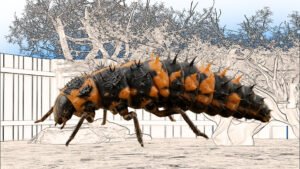
This is the important part. Ladybug larvae look nothing like ladybugs. They are small — a few millimeters when young, up to half an inch when mature. They are dark, often with orange or yellow markings. They have a segmented, somewhat spiky or bumpy appearance. They look, to most people, like something that should be removed immediately.
They should not be removed. A ladybug larva eats more aphids per day than an adult. A single larva can consume 400 aphids per day during its larval stage. Finding ladybug larvae on your aphid-infested plant means the situation is being handled by something better equipped than you are.
How to recognize them: small, dark, elongated, somewhat alligator-shaped, with orange or yellow spots or markings. Often found on the underside of leaves in areas where aphids are present. A photograph in iNaturalist will confirm identification.
🌿 How to Keep Ladybugs in Your Garden
- Provide habitat. Ladybugs overwinter in leaf litter and sheltered spots. Leaving some garden debris in fall — a pile of leaves in a corner, hollow stems of perennials — gives them a place to survive winter.
- Plant nectar sources. Adult ladybugs supplement their diet with pollen and nectar. Dill, fennel, cilantro allowed to flower, yarrow, and marigolds attract and support ladybug populations.
- Avoid broad-spectrum pesticides. Insecticides do not distinguish between pest and predator. Spraying for aphids kills the ladybugs eating the aphids. The aphids recover faster than the ladybug population. The problem becomes worse.
- Tolerate small aphid populations. A small aphid population is a food source that keeps ladybugs in the garden. A garden with no aphids whatsoever has nothing to keep predator insects around. A small, stable aphid population that is clearly being managed by predators does not need intervention.
🚧 About Buying Ladybugs
Purchased ladybugs are available from garden suppliers and have an appealing logic: buy predators, release predators, problem solved. In practice, released ladybugs disperse from the release site within days and mostly leave your garden. They did not evolve a territorial instinct and have no reason to stay.
The better investment: create habitat that encourages wild ladybug populations to establish and remain through the season. Habitat is permanent. Released insects are temporary.
🛒 Supporting Ladybugs
- Insect hotel / beneficial insect habitat — Provides overwintering and nesting habitat for ladybugs and other beneficial insects.
- Dill seeds for attracting beneficials — Allowed to flower, dill is one of the best plants for attracting and retaining predatory and beneficial insects.
- Yarrow plants — A perennial that flowers prolifically and attracts a wide range of beneficial insects throughout the season.
As an Amazon affiliate, I earn from each qualifying purchase. Thank you for supporting TangleWicket.
✨ The Short Version
Ladybugs are the most effective aphid control in any garden. Their larvae are even more effective and look alarming — do not kill them. Create habitat, plant nectar sources, and avoid broad-spectrum pesticides to keep them in your garden.
The best pest management is a garden full of things that eat pests. Ladybugs are the foundation of that system.
Tom Brownthumb once removed what he thought were mysterious pest larvae from his tomatoes. They were ladybug larvae. The aphids celebrated. Tom does not make this mistake anymore.
📚 Related Reads
- Good Bugs vs. Bad Bugs: How to Tell the Difference
- Aphids: The Tiny Menace and How to Evict Them
- Why You Shouldn’t Kill Every Bug You See
TangleWicket is part of the WhistleBump group – find the rest of the family at WhistleBump.com.
35002
©2026 John D Reinhart/Tanglewicket.com – all rights reserved