
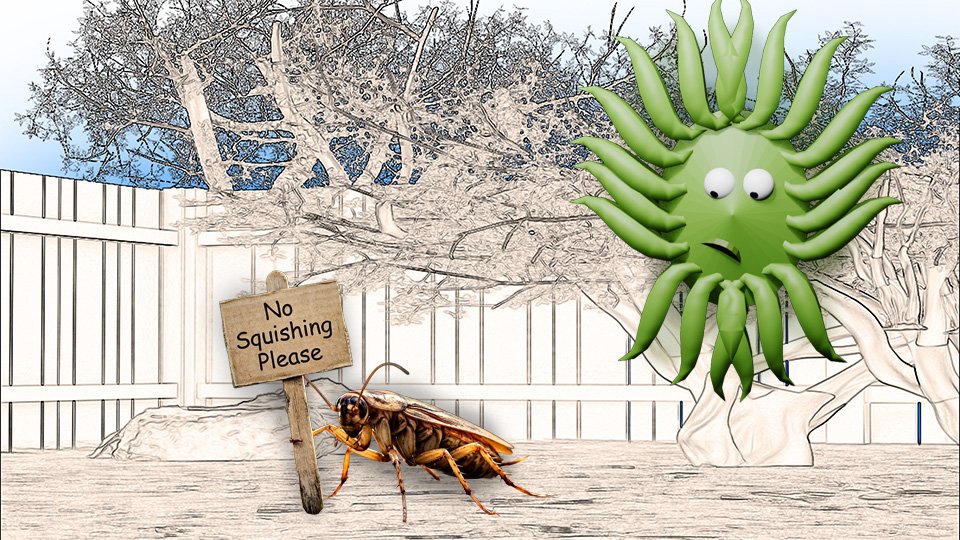
There is an insect on your plant. Your instinct is to remove it. This is understandable. It is also, the majority of the time, the wrong call.
The garden is not a sterile environment and should not be treated like one. It is an ecosystem with predators, prey, decomposers, pollinators, and opportunists all occupying roles in a system that, when functioning, manages most pest problems without your intervention.
Here’s why the remove-everything reflex undermines the very system you’re trying to protect — and the framework for deciding when action is actually warranted.
🤔 The Ecosystem Argument
A garden with predatory insects — ladybugs, ground beetles, lacewings, parasitic wasps — manages aphid, caterpillar, and mite populations continuously and for free. These predators are present because there is something to eat. Remove the prey entirely and the predators leave. Remove the predators by spraying and the prey, which recovers population faster, surges.
The spray treadmill: spray pesticide, kill pests and predators, pest population rebounds before predator population recovers, spray again, repeat indefinitely. The garden becomes dependent on intervention because the natural control system has been dismantled.
The alternative: tolerate small pest populations. They support predator populations. Predator populations keep pest populations in check. The system self-regulates if you let it.
📊 The Three-Question Framework
Before taking any action on an insect, three questions:
- Is it causing visible damage to plants I care about? Cosmetic damage — a few holes in a leaf, minor discoloration — is not a crisis. Plants tolerate substantial insect activity without significant productivity loss.
- Is the population growing rapidly or stable? A stable small population is the ecosystem working correctly. A rapidly growing population may require intervention.
- Have I correctly identified it? Many beneficial insects are killed in cases of mistaken identity. Ladybug larvae. Ground beetles. Parasitic wasps. Hoverflies. Identify before acting.
Only if the answer to all three is clearly yes is action likely to be warranted. Two out of three — or uncertainty on any of them — suggests waiting and watching.
🌿 What Tolerance Looks Like in Practice
- A few aphids on a plant with ladybug larvae nearby. Leave it. The larvae are working.
- A caterpillar on a cabbage plant, one or two, no others visible. Hand-pick and dispose. Not a spray situation.
- Holes in leaves with no visible insect. Investigate before treating. The culprit may be a night feeder already gone, or a beneficial insect doing something unrelated to the holes.
- Twenty percent leaf loss on an otherwise healthy plant. Plants can sustain significant leaf damage without production loss. Twenty percent is often within the tolerance range.
🛒 Tools for Observation Rather Than Reaction
- Hand lens / magnifying glass — For close examination before any decision. Ten seconds of looking correctly is worth more than ten minutes of spraying incorrectly.
- Garden journal — Note what you see, when, and on what plant. Patterns emerge over time that make pest management decisions clearer.
- Field guide to garden insects — For offline reference. A regional guide with good photographs of both pest and beneficial insects at multiple life stages.
As an Amazon affiliate, I earn from each qualifying purchase. Thank you for supporting TangleWicket.
✨ The Short Version
Most insects are neutral or beneficial. Small pest populations are normal and support predator populations that control them. Intervention is warranted when damage is significant, the population is building, and identification is certain.
The garden manages itself better than you might, if you let it.
Tom Brownthumb once declared war on every insect in his garden. He won the war. The garden, relieved of all natural pest control, immediately lost several subsequent battles he had to fight alone. He now observes before acting.
📚 Related Reads
- Good Bugs vs. Bad Bugs: How to Tell the Difference
- Why Ladybugs Are the Best Thing in Your Garden
- When to Use Pesticide and When to Leave It Alone
TangleWicket is part of the WhistleBump group – find the rest of the family at WhistleBump.com.
35005
©2026 John D Reinhart/Tanglewicket.com – all rights reserved