Aphids: The Tiny Menace and How to Evict Them

Aphids are the most common pest in most gardens and the most controllable. Here’s how to identify them, understand their population dynamics, and deal with them without overreacting.

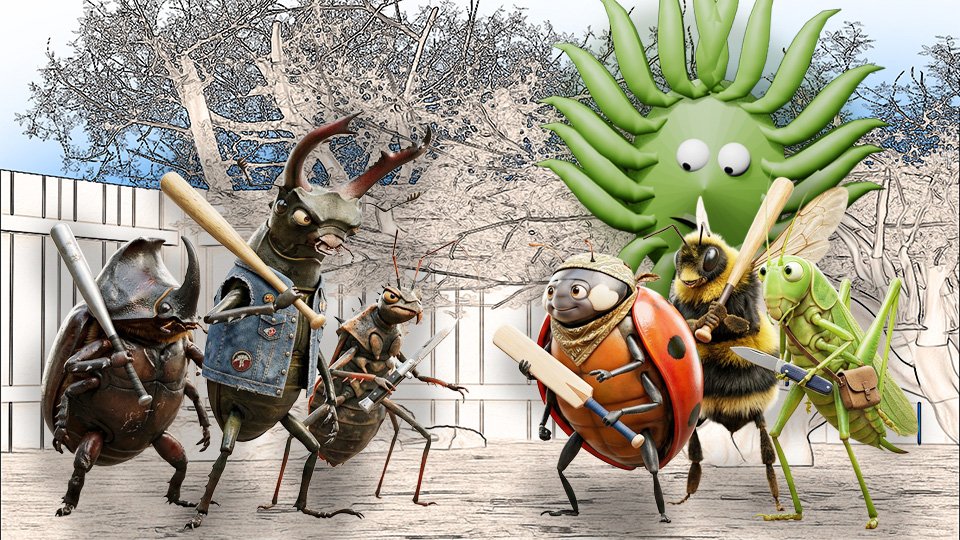
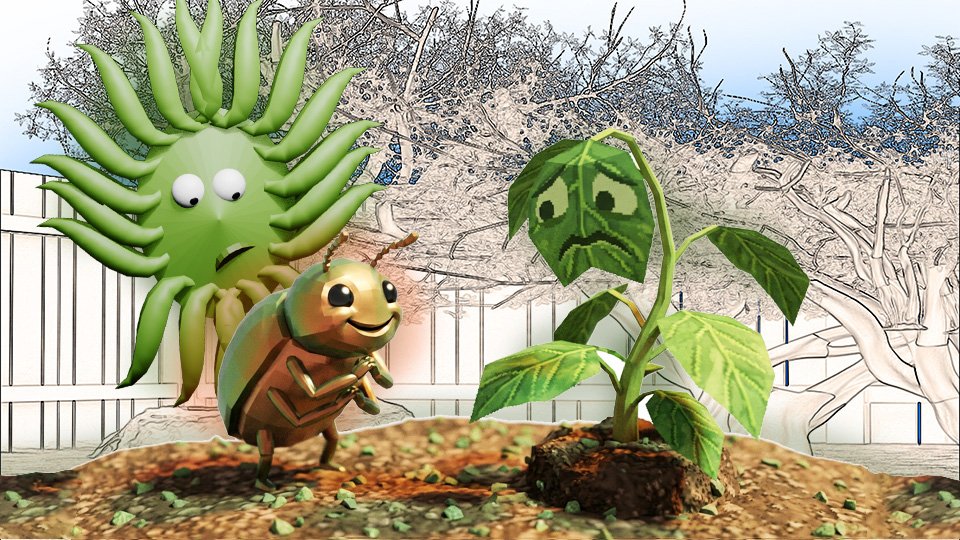
Aphids are small. They are very small. They come in green, black, yellow, brown, and pink depending on species, and they cluster on new growth, stem tips, and the undersides of leaves where they insert a needle-like mouthpart and extract plant sap.

They also reproduce at a rate that makes other fast-reproducing animals look like they’re taking their time. Under ideal conditions, a single aphid can produce dozens of live young per week, all female, all capable of reproducing without mating. A colony can go from ten to ten thousand in approximately no time at all.

Here’s the full picture on aphids — what they do, what they don’t do, and the range of responses from “do nothing” to “actually intervene.”

🔍 How to Know You Have Them

  • Clusters on new growth. Aphids prefer soft, young tissue. Check stem tips, new leaf buds, and the undersides of young leaves.
  • Curling or distorted new leaves. Aphid feeding causes new leaves to curl around the colony, protecting it. This is why aphid infestations can be hard to spot — the leaf has curled around them.
  • Sticky honeydew residue. Aphids excrete a sugary liquid called honeydew as they feed. Sticky, shiny leaves are a sign of aphid activity even before you see the insects themselves.
  • Black sooty mold. Grows on honeydew deposits. If you see black sooty patches on leaves, aphids were or are present above them.
  • Ants tending the plant. Ants actively farm aphids for their honeydew, protecting them from predators and moving them to new growth. Ants on your plants often indicate aphids somewhere on the plant.

📊 The Population Dynamics

Aphid populations are boom and bust by nature. They build rapidly when conditions are favorable — warm temperatures, soft new growth, absence of predators — and crash just as rapidly when conditions change or predator populations respond.

The practical implication: a small to moderate aphid infestation observed on Monday may be declining by Friday as lacewing larvae, ladybugs, parasitic wasps, and other predators arrive to exploit the food source. Waiting and watching for a week before intervening is often the correct strategy.

Intervention is appropriate when: the population is clearly growing rapidly, plants are showing significant wilting or distortion, or predators are not appearing to control the situation.

✅ The Control Options (Least to Most Aggressive)

  • Do nothing and wait. For small, stable populations. Let predators handle it. Check back in a week.
  • Water blast. A strong spray of water from the hose knocks aphids off the plant. They cannot climb back up. Effective for accessible plants and moderate infestations. Repeat every few days.
  • Insecticidal soap. A spray of diluted liquid soap (not detergent) or commercial insecticidal soap solution directly on aphids. Kills on contact by disrupting the cell membrane. Does not leave residue. Safe for beneficial insects that aren’t sprayed directly.
  • Neem oil. A plant-based oil that disrupts aphid feeding, reproduction, and development. More persistent than insecticidal soap. Apply in the evening to avoid harming pollinators.
  • Systemic insecticide. Absorbed into plant tissue and kills insects that feed on it. Effective but also kills any insect that feeds on the plant, including pollinators. Reserve for severe infestations that have not responded to other methods. Do not use on flowering plants that bees visit.

🛒 The Aphid Control Kit

As an Amazon affiliate, I earn from qualifying purchases. Thank you for supporting TangleWicket.

✨ The Short Version

Aphids are common, fast-reproducing, and highly controllable. Small stable populations may be handled by predators without intervention. Growing populations respond well to water blasting, insecticidal soap, or neem oil. Systemic insecticides are the last resort.

Identify, wait and observe, then escalate only as needed.

Tom Brownthumb once sprayed a large aphid colony with soap spray and a garden hose simultaneously. The plants were very clean. The aphids were gone. So, temporarily, was his composure.

📚 Related Reads

Tanglewicket is part of the John D Reinhart content family. Writer, illustrator, videographer, and accidental filmmaker — find the whole story at JohnDReinhart.com.

35003

©2026 John D Reinhart / tanglewicket.com/. All rights reserved.

When to Use Pesticide and When to Leave It Alone

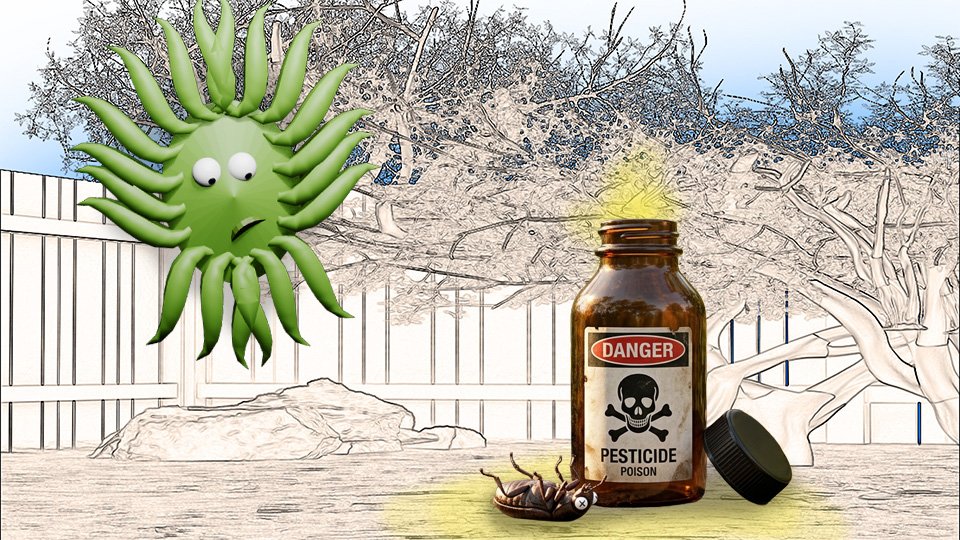
Pesticides are a tool, not a first response. Here’s how to decide when intervention is actually warranted, which products do the least collateral damage, and when to leave it alone.

The question is not “What pesticide should I use?” The question is “Should I use a pesticide at all?”

Most garden pest situations do not require pesticide application. Most are handled by the garden’s natural predator population, by mechanical means, or by doing nothing and waiting. Pesticide is the appropriate response in a specific subset of situations, and using it outside that subset creates problems it was supposed to solve.

Here’s the framework for making that decision correctly.

🚫 When to Leave It Alone

  • Small, stable populations with predators present. A few aphids with ladybugs nearby. A caterpillar with parasitic wasp cocoons on its back. The ecosystem is working. Adding pesticide disrupts it.
  • Cosmetic damage without productivity loss. Holes in leaves, minor discoloration, a few chewed edges. Plants can sustain substantial leaf damage without reduced yields. Cosmetic damage is not a pest crisis.
  • Late in the season. A pest infestation in late August on a plant that has already produced its main crop has limited opportunity to cause meaningful harm. The cost-benefit of treatment is low.
  • When you haven’t identified the pest. Treating an unknown insect with a broad-spectrum pesticide is guesswork with collateral damage. Identify first.

✅ When Pesticide Is Appropriate

  • Rapidly growing populations threatening plant productivity. An aphid infestation that has tripled in a week on a young seedling. A slug population destroying the seedling bed. A cutworm taking plants overnight.
  • High-value plants with no natural control in sight. A fruit tree with a scale infestation building with no predators present. A late-season tomato crop with spider mites in damaging numbers.
  • Pests that don’t respond to mechanical methods. Spider mites that have returned after repeated water blasting. Slugs in populations too large for trapping and handpicking alone.

🌿 The Pesticide Spectrum: Least to Most Harmful

  • Physical barriers (not pesticides). Row covers, copper tape, cutworm collars. Zero chemical impact. First response.
  • Insecticidal soap. Kills soft-bodied insects on contact. Breaks down quickly. Minimal impact on beneficials if applied carefully (avoid open flowers and known beneficial habitats). The correct escalation step after physical methods.
  • Neem oil. Disrupts insect feeding and reproduction. Organic, OMRI-listed. Apply at dusk to minimize pollinator contact. More persistent than soap, still relatively low-impact.
  • Pyrethrin (organic) or permethrin (synthetic). Broad-spectrum. Effective on a wide range of insects including beneficials. Reserve for significant infestations. Do not apply when pollinators are active.
  • Systemic insecticides (imidacloprid, etc.). Absorbed into plant tissue. Kills any insect feeding on the plant, including pollinators on flowers. Last resort. Never on flowering plants.

🛒 The Minimal-Impact Pest Kit

  • Insecticidal soap ready-to-use — The first chemical escalation step. Contact kill, low residue, minimal collateral damage.
  • Neem oil concentrate — Organic, persistent, effective on a range of soft-bodied pests. Apply at dusk.
  • Garden sprayer — For targeted application to affected plants rather than broadcast spraying. Precision application reduces collateral damage.

As an Amazon affiliate, I earn from each qualifying purchase. Thank you for supporting TangleWicket.

✨ The Short Version

Leave it alone when populations are stable, predators are present, or damage is cosmetic. Intervene when populations are building rapidly and threatening plant productivity.

Start with the least aggressive method. Escalate only if needed. Never spray broad-spectrum products on flowering plants.

Tom Brownthumb once broadcast-sprayed his entire garden at the first sign of aphids. He eliminated the aphids, the ladybugs, the lacewings, and the parasitic wasps. The aphids returned alone. He now starts with soap spray on the affected plant only.

📚 Related Reads

Tanglewicket is part of the John D Reinhart content family. Writer, illustrator, videographer, and accidental filmmaker — find the whole story at JohnDReinhart.com.

35008

©2026 John D Reinhart / tanglewicket.com/. All rights reserved.

Why Ladybugs Are the Best Thing in Your Garden

Ladybugs eat aphids at a rate that no spray can match and they do it for free. Here’s the full case for ladybugs, their larvae, and how to keep them in your garden once they arrive.

The ladybug has excellent public relations. It is the insect that children collect, that songs are written about, that nobody has strong negative feelings toward. This goodwill is, unusually for an insect, completely justified.

A single adult ladybug eats approximately 5,000 aphids over its lifetime. A ladybug larva — the creature that will become the adult — is even more voracious per day. A healthy ladybug population in a garden is the most effective aphid control available, it costs nothing, and it arrives on its own if you create the conditions it needs.

Here’s the case for ladybugs — including the part about the larvae that most people get completely wrong.

🐞 The Adult Ladybug

The familiar red-and-black spotted beetle. Most species in North America are beneficial predators of aphids, mites, and small insect eggs. They are voracious despite looking polite.

What they eat: primarily aphids, but also spider mites, scale insects, mealybugs, and insect eggs. A single adult can consume fifty or more aphids per day.

When they’re present: ladybugs are most active in spring and summer when aphid populations peak. They overwinter as adults in sheltered locations — leaf litter, bark crevices, the corners of structures. They emerge in spring when temperatures warm.

🐛 The Ladybug Larva: The One You Probably Keep Killing

A 3D render of a ladybug larva in the TangleWicket garden, by John D Reinhart

This is the important part. Ladybug larvae look nothing like ladybugs. They are small — a few millimeters when young, up to half an inch when mature. They are dark, often with orange or yellow markings. They have a segmented, somewhat spiky or bumpy appearance. They look, to most people, like something that should be removed immediately.

They should not be removed. A ladybug larva eats more aphids per day than an adult. A single larva can consume 400 aphids per day during its larval stage. Finding ladybug larvae on your aphid-infested plant means the situation is being handled by something better equipped than you are.

How to recognize them: small, dark, elongated, somewhat alligator-shaped, with orange or yellow spots or markings. Often found on the underside of leaves in areas where aphids are present. A photograph in iNaturalist will confirm identification.

🌿 How to Keep Ladybugs in Your Garden

  • Provide habitat. Ladybugs overwinter in leaf litter and sheltered spots. Leaving some garden debris in fall — a pile of leaves in a corner, hollow stems of perennials — gives them a place to survive winter.
  • Plant nectar sources. Adult ladybugs supplement their diet with pollen and nectar. Dill, fennel, cilantro allowed to flower, yarrow, and marigolds attract and support ladybug populations.
  • Avoid broad-spectrum pesticides. Insecticides do not distinguish between pest and predator. Spraying for aphids kills the ladybugs eating the aphids. The aphids recover faster than the ladybug population. The problem becomes worse.
  • Tolerate small aphid populations. A small aphid population is a food source that keeps ladybugs in the garden. A garden with no aphids whatsoever has nothing to keep predator insects around. A small, stable aphid population that is clearly being managed by predators does not need intervention.

🚧 About Buying Ladybugs

Purchased ladybugs are available from garden suppliers and have an appealing logic: buy predators, release predators, problem solved. In practice, released ladybugs disperse from the release site within days and mostly leave your garden. They did not evolve a territorial instinct and have no reason to stay.

The better investment: create habitat that encourages wild ladybug populations to establish and remain through the season. Habitat is permanent. Released insects are temporary.

🛒 Supporting Ladybugs

As an Amazon affiliate, I earn from each qualifying purchase. Thank you for supporting TangleWicket.

✨ The Short Version

Ladybugs are the most effective aphid control in any garden. Their larvae are even more effective and look alarming — do not kill them. Create habitat, plant nectar sources, and avoid broad-spectrum pesticides to keep them in your garden.

The best pest management is a garden full of things that eat pests. Ladybugs are the foundation of that system.

Tom Brownthumb once removed what he thought were mysterious pest larvae from his tomatoes. They were ladybug larvae. The aphids celebrated. Tom does not make this mistake anymore.

📚 Related Reads


Tanglewicket is part of the John D Reinhart content family. Writer, illustrator, videographer, and accidental filmmaker — find the whole story at JohnDReinhart.com.

35002

©2026 John D Reinhart / tanglewicket.com/. All rights reserved.

Why You Shouldn’t Kill Every Bug You See

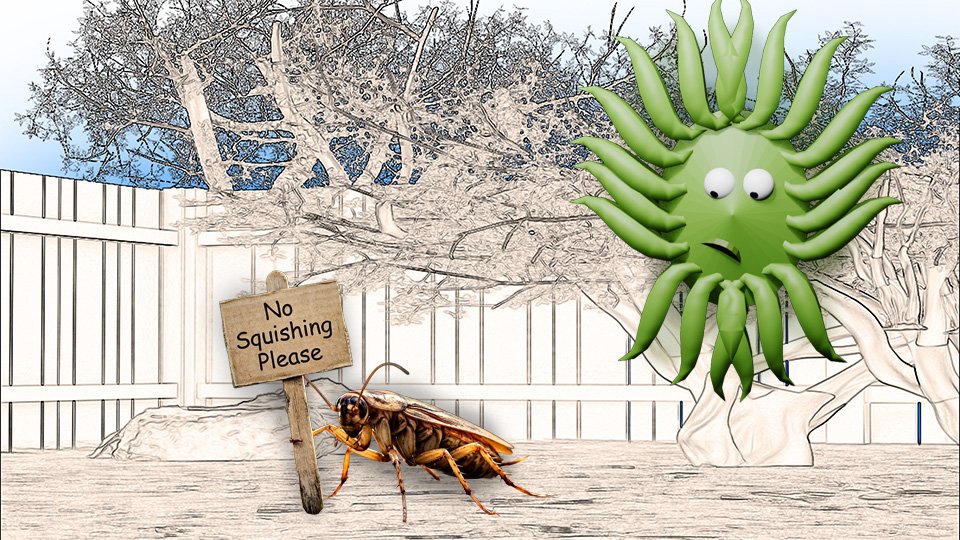
The instinct to remove every unfamiliar insect from your garden is well-intentioned and frequently counterproductive. Here’s why restraint is usually the correct pest response.

There is an insect on your plant. Your instinct is to remove it. This is understandable. It is also, the majority of the time, the wrong call.

The garden is not a sterile environment and should not be treated like one. It is an ecosystem with predators, prey, decomposers, pollinators, and opportunists all occupying roles in a system that, when functioning, manages most pest problems without your intervention.

Here’s why the remove-everything reflex undermines the very system you’re trying to protect — and the framework for deciding when action is actually warranted.

🤔 The Ecosystem Argument

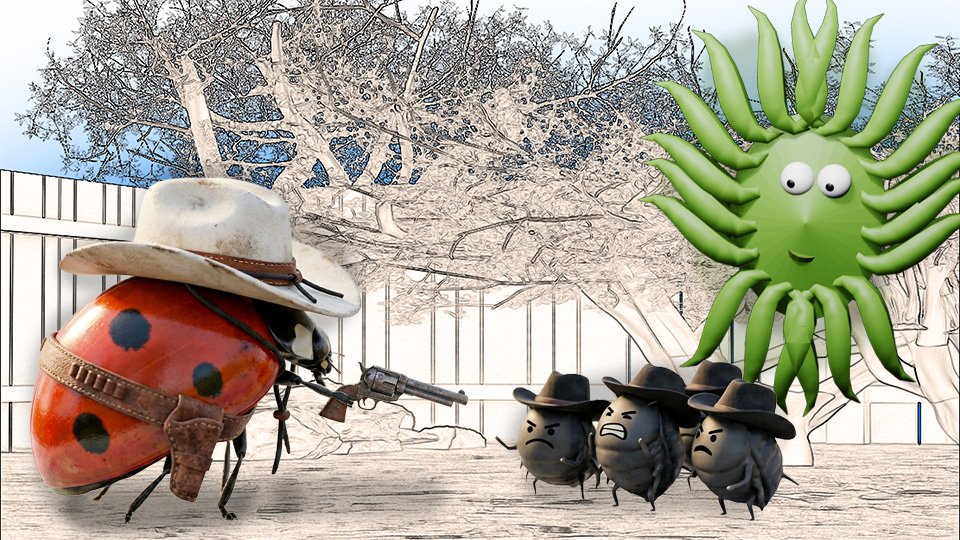
A garden with predatory insects — ladybugs, ground beetles, lacewings, parasitic wasps — manages aphid, caterpillar, and mite populations continuously and for free. These predators are present because there is something to eat. Remove the prey entirely and the predators leave. Remove the predators by spraying and the prey, which recovers population faster, surges.

The spray treadmill: spray pesticide, kill pests and predators, pest population rebounds before predator population recovers, spray again, repeat indefinitely. The garden becomes dependent on intervention because the natural control system has been dismantled.

The alternative: tolerate small pest populations. They support predator populations. Predator populations keep pest populations in check. The system self-regulates if you let it.

📊 The Three-Question Framework

Before taking any action on an insect, three questions:

  • Is it causing visible damage to plants I care about? Cosmetic damage — a few holes in a leaf, minor discoloration — is not a crisis. Plants tolerate substantial insect activity without significant productivity loss.
  • Is the population growing rapidly or stable? A stable small population is the ecosystem working correctly. A rapidly growing population may require intervention.
  • Have I correctly identified it? Many beneficial insects are killed in cases of mistaken identity. Ladybug larvae. Ground beetles. Parasitic wasps. Hoverflies. Identify before acting.

Only if the answer to all three is clearly yes is action likely to be warranted. Two out of three — or uncertainty on any of them — suggests waiting and watching.

🌿 What Tolerance Looks Like in Practice

  • A few aphids on a plant with ladybug larvae nearby. Leave it. The larvae are working.
  • A caterpillar on a cabbage plant, one or two, no others visible. Hand-pick and dispose. Not a spray situation.
  • Holes in leaves with no visible insect. Investigate before treating. The culprit may be a night feeder already gone, or a beneficial insect doing something unrelated to the holes.
  • Twenty percent leaf loss on an otherwise healthy plant. Plants can sustain significant leaf damage without production loss. Twenty percent is often within the tolerance range.

🛒 Tools for Observation Rather Than Reaction

  • Hand lens / magnifying glass — For close examination before any decision. Ten seconds of looking correctly is worth more than ten minutes of spraying incorrectly.
  • Garden journal — Note what you see, when, and on what plant. Patterns emerge over time that make pest management decisions clearer.
  • Field guide to garden insects — For offline reference. A regional guide with good photographs of both pest and beneficial insects at multiple life stages.

As an Amazon affiliate, I earn from each qualifying purchase. Thank you for supporting TangleWicket.

✨ The Short Version

Most insects are neutral or beneficial. Small pest populations are normal and support predator populations that control them. Intervention is warranted when damage is significant, the population is building, and identification is certain.

The garden manages itself better than you might, if you let it.

Tom Brownthumb once declared war on every insect in his garden. He won the war. The garden, relieved of all natural pest control, immediately lost several subsequent battles he had to fight alone. He now observes before acting.

📚 Related Reads

Tanglewicket is part of the John D Reinhart content family. Writer, illustrator, videographer, and accidental filmmaker — find the whole story at JohnDReinhart.com.

35005

©2026 John D Reinhart / tanglewicket.com/. All rights reserved.

Good Bugs vs. Bad Bugs: How to Tell the Difference

Not every bug in your garden is your enemy. Some are essential. Some are neutral. A small number are genuinely problematic. Here’s how to tell them apart before you reach for anything.

The reflex is understandable. You see a bug on your plant. You remove the bug. You feel like you’ve done something useful. You may have done the opposite.

The majority of insects in a garden are either beneficial or neutral. Fewer than one percent of insect species are agricultural pests. The rest are pollinators, predators of actual pests, decomposers, or bystanders doing something unrelated to your vegetables.

Here’s the guide to the garden’s insect population — who the allies are, who the enemies are, and how to tell the difference before making a decision you’ll regret on the tomatoes.

✅ The Beneficial Insects

  • Ladybugs (and their larvae). A single adult ladybug eats up to 5,000 aphids in its lifetime. The larvae are even more voracious. They look nothing like the adult — they are small, dark, spiky, and alarming in appearance. Many gardeners kill ladybug larvae by mistake. They are among your best allies. Learn what they look like.
  • Ground beetles. Large, dark, fast-moving beetles that live in soil and under debris. They eat slugs, soil-dwelling pest larvae, and other ground-level pests. They are also the beetles most frequently stomped on by startled gardeners. They are your friends. Leave them alone.
  • Lacewings. Delicate, pale green insects with large transparent wings. Adults eat pollen and nectar. The larvae — called aphid lions — eat aphids, mites, and small insect eggs voraciously. If you see something small and hungry-looking destroying your aphid population, it might be a lacewing larva.
  • Parasitic wasps. Small, non-stinging wasps that lay eggs in caterpillars, aphids, and other pest larvae. If you see a caterpillar covered in tiny white cocoons on its back, parasitic wasps have already handled the situation. Do not remove the caterpillar. The wasps are working.
  • Hoverflies. Look like small bees or wasps but have only two wings (flies) rather than four (bees). Adults pollinate flowers. Larvae eat aphids. A dual-purpose beneficial insect that gets killed regularly by people who think it’s a stinging insect.
  • Bees and other pollinators. Without pollinators, fruiting vegetables produce nothing. Tomatoes, squash, cucumbers, peppers, beans — all require pollination. Bees are not optional infrastructure.

❌ The Actual Pest Insects

  • Aphids. Small, soft-bodied insects that cluster on new growth and suck plant sap. They reproduce rapidly and can overwhelm a plant in a short time. Sticky honeydew residue and curling new leaves are the signs. Highly controllable with multiple methods.
  • Japanese beetles. Metallic green and copper beetles that skeletonize leaves and eat flowers. Highly visible, highly destructive, and frustratingly difficult to control at population scale.
  • Slugs and snails. Not insects but behave like pests. Ragged holes in leaves, silver slime trails, overnight destruction. Most active in wet conditions.
  • Caterpillars of certain moths and butterflies. Cabbage loopers, tomato hornworms, cutworms. The caterpillar stage of some otherwise harmless or beneficial adult insects. Identified by chewed leaves, frass (droppings), and the caterpillar itself.
  • Spider mites. Tiny, barely visible mites that create stippled, bronzed foliage and fine webbing. Thrive in hot, dry conditions. Serious infestations can defoliate plants quickly.

🔍 The Identification Rule

Before treating anything, identify it. This means getting close enough to actually see the insect, not just noticing that something is in the garden. A phone camera with the macro setting or a simple magnifying glass resolves most identification questions. An app like iNaturalist can identify insects from a photograph.

The decision tree: Is it causing visible damage to plants you care about? Is the damage significant rather than cosmetic? Is the population building rather than stable? If yes to all three, you have a pest situation worth addressing. If no to any of them, leave it alone and let the garden’s own predator population handle it.

🛒 The Identification and Management Kit

  • Hand lens / magnifying loupe — For actual close examination of insects before making any decision. Ten times magnification resolves most identification questions.
  • Field guide to garden insects — For offline reference. A regional guide with good photographs of both pest and beneficial insects at multiple life stages.
  • iNaturalist or similar ID app — Photograph the insect, get an identification. The technology that makes correct insect ID accessible to everyone.

As an Amazon affiliate, I earn from each qualifying purchase. Thank you for supporting TangleWicket.

✨ The Short Version

Most insects in your garden are allies or bystanders. A small number are pests. Identify before acting. The bugs eating your pests are more valuable than the treatment you’d use to kill both.

Get close. Look carefully. Ask what it’s actually doing before doing something about it.

Tom Brownthumb once sprayed an aphid infestation and killed the ladybug larvae eating it. The aphids, having no remaining predators, returned in force the following week. He now identifies first.

📚 Related Reads

Tanglewicket is part of the John D Reinhart content family. Writer, illustrator, videographer, and accidental filmmaker — find the whole story at JohnDReinhart.com.

35001

©2026 John D Reinhart / tanglewicket.com/. All rights reserved.

Japanese Beetles: The Worst Houseguests in the Garden

Japanese beetles are beautiful, destructive, and frustratingly difficult to control at scale. Here’s what works, what doesn’t, and why the traps are making your problem worse.

Japanese beetles are among the most infuriating garden pests in the northeastern United States, and they have the nerve to be quite attractive. Metallic green thorax, copper wing covers, iridescent in direct sun. They look like something you’d find in a natural history museum display. They eat like they haven’t had a meal in weeks.

They skeletonize leaves by eating the tissue between the veins, leaving behind a brown lacework that eventually dies. They eat flowers. They eat fruit. A large population can defoliate a susceptible plant in days.

Here’s the honest guide to Japanese beetle management — what works, what doesn’t, and why the yellow trap you bought is almost certainly making things worse.

🤔 The Biology

Japanese beetles spend most of their life underground. Adults emerge in early summer — typically late June through August in the Northeast — feed voraciously for six to eight weeks, mate, and lay eggs in the soil. Those eggs hatch into grubs that spend the rest of the year underground eating grass roots before pupating and emerging as next year’s beetles.

Why they’re hard to control: the adult population in your garden is not just your beetles. Japanese beetles fly up to five miles and are attracted by the pheromones and plant volatiles released by beetles already feeding. A heavily infested plant is actively attracting more beetles from the surrounding area. Population management at the individual property scale is genuinely difficult.

❌ The Japanese Beetle Trap Problem

Japanese beetle traps — the yellow bag-style traps that use pheromone and floral lure — are effective at capturing Japanese beetles. They are so effective that they attract far more beetles to your property than would otherwise be there, and the traps do not capture all of them.

The research consistently shows: properties with Japanese beetle traps have more beetle damage than properties without them. The traps attract beetles from a wide area. Beetles land on nearby plants before reaching the trap. You have spent money to increase your beetle problem.

If you use traps, place them at the far edge of your property — as far from any plants you care about as possible. Do not place them near the garden.

✅ What Actually Works

  • Hand picking. In the morning when beetles are sluggish from the cool, drop them into a bucket of soapy water. Tedious, effective, and free. A daily morning round during peak season removes a significant portion of the feeding population.
  • Neem oil. Applied to plant foliage, neem oil deters feeding and disrupts the beetle’s life cycle. It does not kill on contact but reduces feeding damage meaningfully when applied consistently.
  • Row covers. Lightweight fabric covers that exclude beetles physically. Highly effective for protecting specific plants during the six to eight week adult season. Must be removed for pollination on flowering vegetables.
  • Milky spore. A biological control containing Bacillus popilliae, a bacterium that infects and kills Japanese beetle grubs in the soil. Applied to lawns, it reduces the grub population that produces next year’s adults. Takes two to three years to establish but provides long-term population reduction.
  • Nematodes. Beneficial nematodes applied to soil target Japanese beetle grubs. More immediate than milky spore, less persistent. Applied in late summer when young grubs are near the surface.

🌿 Plant Selection as Long-Term Strategy

Japanese beetles have preferred plants and plants they largely ignore. Roses, raspberries, grapes, and linden trees are heavily targeted. Boxwood, forsythia, holly, and most conifers are largely left alone.

For gardeners in heavily infested areas, plant selection is the long-term strategy. Replacing heavily targeted ornamentals with less-preferred species reduces feeding pressure without ongoing control effort.

🛒 The Control Kit

  • Neem oil concentrate — For foliar deterrent application. Reduces feeding damage on affected plants.
  • Row cover fabric — Physical exclusion during the adult season. The most reliable protection for high-value plants.
  • Milky spore powder — Long-term grub management applied to turf. Two to three year establishment, then persistent population reduction.
  • Beneficial nematodes — For grub control in the soil. Apply in late summer when grubs are young and near the surface.

As an Amazon affiliate, I earn from each qualifying purchase. Thank you for supporting TangleWicket.

✨ The Short Version

Japanese beetles are hard to control at population scale. The traps make the problem worse. Hand pick in the morning. Use neem oil and row covers to protect specific plants. Apply milky spore or nematodes for long-term grub reduction. Consider plant selection as the genuine long-term strategy.

They will always be there. The goal is keeping the damage at a tolerable level.

Tom Brownthumb bought a Japanese beetle trap and placed it next to his rose bushes. This was not his finest garden decision. The trap has been relocated to the far edge of the property. The rose bushes have not recovered their dignity.

📚 Related Reads

Tanglewicket is part of the John D Reinhart content family. Writer, illustrator, videographer, and accidental filmmaker — find the whole story at JohnDReinhart.com.

35010

©2026 John D Reinhart / tanglewicket.com/. All rights reserved.