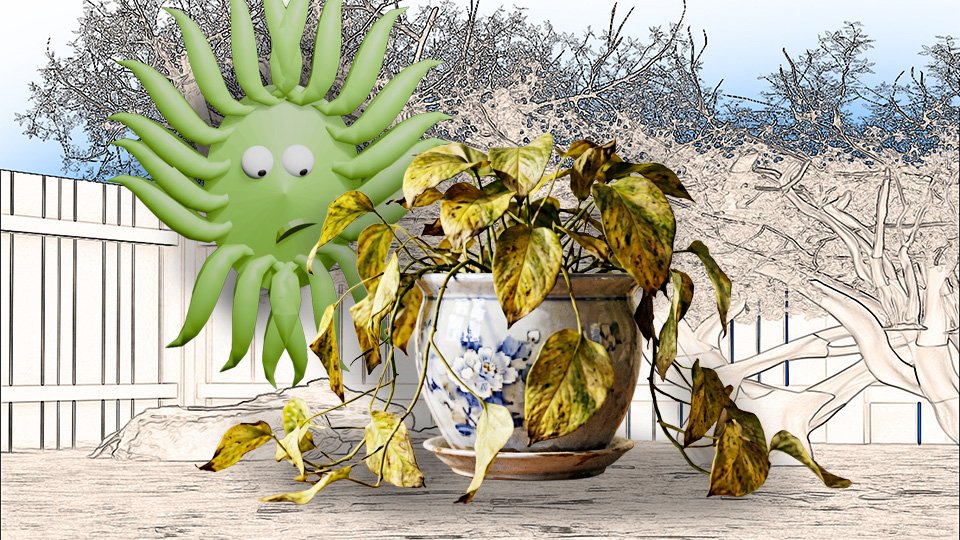
A yellow plant is a plant with a complaint. The challenge is that yellow is a symptom with many possible causes, and treating the wrong cause wastes time and occasionally makes things worse.
The good news: the pattern of yellowing — which leaves, what color exactly, where on the plant, how fast — contains the diagnosis. Plants are not subtle about what they need. They just speak a language that takes a little learning.
Here’s the guide to reading that language. From the most common causes to the less common ones, with what to look for and what to do.
🟡 Cause One: Nitrogen Deficiency
The most common reason garden plants turn yellow. Nitrogen is the primary nutrient plants use for leaf and stem growth. When it’s deficient, the plant pulls nitrogen from older leaves to support new growth.
The pattern: yellowing starts on the oldest leaves — the lower, inner leaves — and moves upward. The yellowing is uniform across the leaf, not in patches. Upper leaves remain green while lower leaves yellow and eventually drop.
What to do: feed with a nitrogen-rich fertilizer. A balanced granular fertilizer, fish emulsion, or blood meal applied to the soil will show visible improvement within a week or two. Consistent fertilizing prevents recurrence.
🟡 Cause Two: Overwatering
Overwatered roots cannot deliver nutrients to leaves even when nutrients are present in the soil. The result looks like nutrient deficiency but is actually oxygen deprivation.
The pattern: yellowing across multiple leaves, both old and new. Soil is wet or consistently moist. The plant may also show soft stems or wilting despite wet soil.
What to do: stop watering. Allow the soil to dry out significantly before resuming. Check drainage — if water cannot exit the container or bed, improve it. See our overwatering post for the full picture.
🟡 Cause Three: Iron Deficiency (Chlorosis)
Iron chlorosis produces a distinctive pattern that distinguishes it from nitrogen deficiency. The plant cannot move iron efficiently — often because soil pH is too high — and leaves lose their green color while the veins remain green.
The pattern: new growth at the top of the plant turns yellow first, while the veins stay green. This interveinal yellowing — yellow leaf, green veins — is the diagnostic signature of iron chlorosis.
What to do: test soil pH. Iron chlorosis is typically a pH problem rather than a true iron shortage — the iron is present but unavailable at high pH. Acidifying the soil with sulfur or an acidifying fertilizer makes iron available again. Chelated iron products provide immediate temporary relief.
🟡 Cause Four: Natural Aging
Not all yellowing is a problem. Lower leaves on established plants yellow and drop as part of normal aging. The plant is reallocating resources from old leaves to new growth.
The pattern: occasional lower leaves yellowing on otherwise healthy, actively growing plants. New growth is green and vigorous. No spreading pattern.
What to do: remove the yellow leaves for aesthetics and airflow. Nothing else required.
🟡 Cause Five: Pest or Disease Damage
Spider mites, thrips, and certain fungal diseases produce yellowing as a symptom. These are usually distinguishable by accompanying signs — stippling, spots, webbing, or powdery coating on the affected leaves.
The pattern: irregular yellowing that doesn’t follow the uniform lower-to-upper or interveinal pattern of nutrient deficiency. Often accompanied by visible damage, spots, or insects on the leaf surface or underside.
What to do: identify the pest or disease first. Treatment varies widely. A magnifying glass and a look at the underside of leaves reveals most common culprits. See our BUGS category for identification and treatment guides.
🟡 Cause Six: Too Little Light
Plants in insufficient light cannot photosynthesize efficiently. Leaves lose their green color and the plant becomes leggy, weak, and pale.
The pattern: general paleness and legginess across the whole plant. Often accompanied by stretched stems reaching toward the nearest light source.
What to do: move the plant to a sunnier location if possible. Review the light requirements for the specific plant. A sun requirement mismatch is a siting problem, not a soil problem.
🛒 Tools for Diagnosing and Treating
- Soil pH test kit — For identifying iron chlorosis caused by high pH. Inexpensive and gives an immediate reading.
- Balanced granular fertilizer — The first treatment for suspected nitrogen deficiency. Covers multiple nutrient bases in one application.
- Chelated iron supplement — For interveinal yellowing caused by iron chlorosis. Provides immediately available iron while the pH issue is addressed longer-term.
- Magnifying glass for pest inspection — For identifying spider mites, thrips, and other small pests on leaf surfaces and undersides.
As an Amazon affiliate, I earn from each qualifying purchase. Thank you for supporting TangleWicket.
✨ The Short Version
Yellow starting on lower leaves: nitrogen deficiency. Yellow with green veins on new growth: iron chlorosis, check pH. Yellow across multiple leaves with wet soil: overwatering. Isolated lower leaves yellowing on healthy plant: normal aging. Yellow with visible damage or insects: pest or disease.
The pattern tells the story. Read the pattern before reaching for a solution.
Tom Brownthumb once treated nitrogen deficiency with more water. The plant had opinions. They were not good opinions.
📚 Related Reads
- Fertilizer Basics: What N-P-K Actually Means
- Soil: The Thing Beginners Ignore and Experts Obsess Over
- Why Overwatering Kills More Plants Than Underwatering
TangleWicket is part of the WhistleBump group – find the rest of the family at WhistleBump.com.
33001
©2026 John D Reinhart/Tanglewicket.com – all rights reserved