
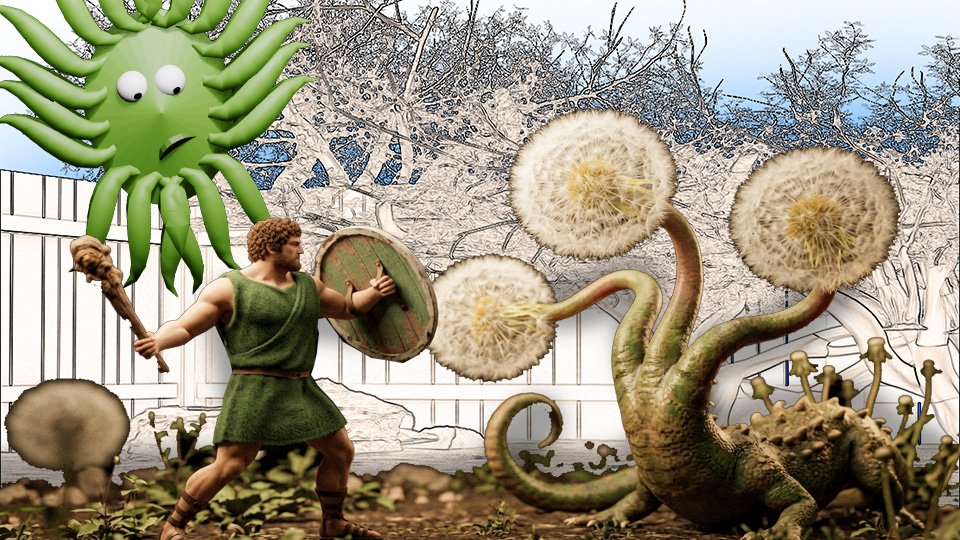
You spent a Saturday pulling weeds. The garden looked excellent. Two weeks later it looked worse than before you started. You are confused and demoralized and wondering why you bothered.
What you may have done, without knowing it, is made the problem worse. Not through any failing on your part. Through a combination of weed biology and the unintended consequences of the most natural garden action there is.
Here’s what actually happened — and how to weed in ways that reduce the population rather than stimulating it.
🌱 Mechanism One: Root Fragmentation
Perennial weeds — dandelions, bindweed, creeping Charlie, quackgrass — regenerate from root fragments. This is their survival mechanism. A dandelion taproot broken off two inches below the surface produces two plants where there was one. Bindweed rhizomes (root-like stems that travel sideways just below the soil surface, sprouting new plants as they go) snapped into four pieces produce four plants.
What happened: you pulled enthusiastically. The roots broke. The breaks are in the ground. Each fragment is now a new plant. You didn’t remove the weeds. You propagated them.
The fix: for taprooted weeds, use a weeding tool that goes deep enough to extract the full root. For spreading rhizome weeds, repeated cutting at the surface exhausts the root reserves over time — this takes multiple sessions, not one. Patience is the tool.
🌱 Mechanism Two: Soil Disturbance and Seed Activation
Your garden soil contains a seed bank of dormant weed seeds that can remain viable for years. These seeds need two things to germinate: light and warmth. They are waiting at various depths, and most of them are in the dark.
What happened: pulling weeds disturbs the soil. Disturbed soil brings dormant seeds from below the surface into the top inch of soil where light reaches. You didn’t just pull weeds. You planted the next generation.
The fix: disturb the soil as little as possible when weeding. A hoe that cuts at soil level without turning the soil activates far fewer dormant seeds than hand-pulling with soil disturbance. After weeding, cover the bare ground with mulch immediately to block light from reaching any seeds you did bring up.
🌱 Mechanism Three: Pulling Too Late
An annual weed that has already flowered has already made its seeds. Pulling it at this stage removes the plant but seeds may have already dispersed, or they may be present on the plant and dispersed during the pulling process.
What happened: you pulled a plant that had already seeded, or you shook ripe seeds loose during removal. The plant is gone. The seeds are in the soil.
The fix: weed before flowering. An annual weed caught before it flowers is fully neutralized. An annual weed pulled after seeding is a partial win at best.
✅ How to Weed Without Backfiring
- Hoe rather than pull when possible. Hoeing cuts weeds at the surface with minimal soil disturbance. Fewer dormant seeds activated.
- Pull perennials with a tool designed for root extraction. Not your hands, which can’t compete with a well-anchored taproot without breaking it.
- Mulch immediately after weeding. Cover any disturbed soil before new seeds can germinate in the opening you created.
- Weed when the soil is moist. Wet soil releases roots more completely than dry soil, reducing fragmentation of perennial roots.
- Time it right. Annual weeds before flowering. Perennial weeds any time — but with the right tool and complete root removal as the goal.
🛒 Tools That Weed Without Backfiring
- Stirrup hoe — Minimal soil disturbance, effective on seedling-stage annual weeds. The correct tool for the most common weeding situation.
- CobraHead weeder — A curved blade that gets under roots and lifts them with minimal surrounding soil disturbance.
- Dandelion digger — Deep extraction tool for taprooted perennials. Gets the whole root without the fragment problem.
As an Amazon affiliate, I earn from qualifying purchases. Thank you for supporting TangleWicket.
✨ The Short Version
Pulling weeds makes more weeds when it fragments perennial roots, when it disturbs soil and activates dormant seeds, or when the plant has already seeded.
Hoe instead of pulling when possible. Extract the full root on perennials. Mulch bare ground immediately. Weed before flowering.
Tom Brownthumb once tilled a bed to remove weeds. The following week it looked like a weed nursery. He now hoes. Gently.
📚 Related Reads
- Why Weeds Win — and How to Actually Stop Them
- The Difference Between Annual and Perennial Weeds
- Mulch: The Weed’s Worst Enemy
TangleWicket is part of the WhistleBump group – find the rest of the family at WhistleBump.com.
34003
©2026 John D Reinhart/Tanglewicket.com – all rights reserved