
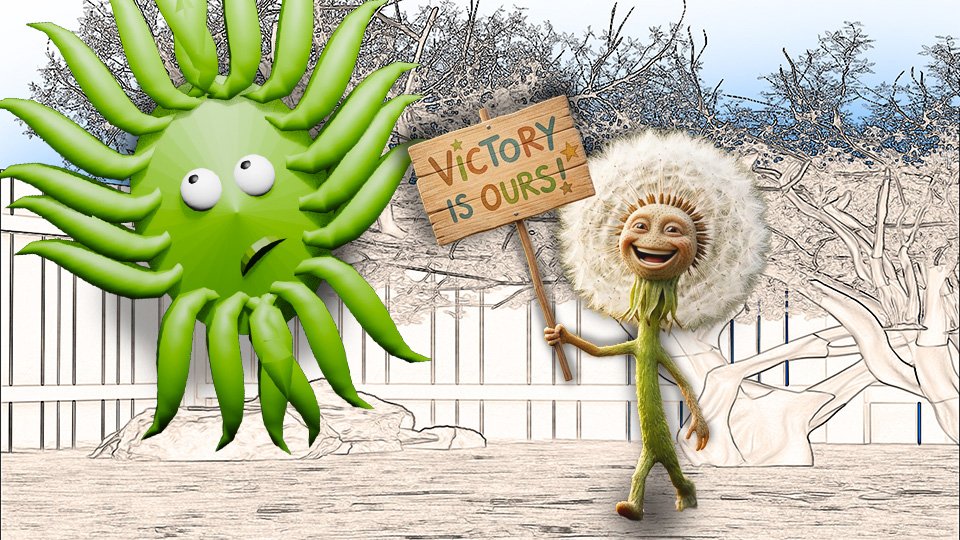
Weeds are not lazy gardeners’ punishment. They are not a sign that you’re doing it wrong. They are one of the most successful biological strategies in the history of plant life, and they have been refining that strategy for considerably longer than you have been trying to stop them.
Understanding why weeds are so relentlessly effective is the first step toward managing them efficiently. Fighting a system you don’t understand is how people spend entire weekends pulling dandelions and find more dandelions the following Saturday.
Here’s how weeds work, why they always seem to come back, and the approach that actually reduces them over time rather than just rearranging them.
🤔 Why Weeds Are So Good at This
- Prolific seed production. A single dandelion produces up to 15,000 seeds per year. A lamb’s quarter plant can produce 75,000. A pigweed: 100,000 or more. These are not typos. Each seed is viable and mobile — carried by wind, water, birds, and soil movement. The weed population in your garden soil right now, waiting for the right conditions, is enormous.
- Seeds that wait. Weed seeds can remain dormant in soil for years — sometimes decades — waiting for the conditions that trigger germination. Disturb the soil and you bring dormant seeds to the surface where light and warmth activate them. This is why tilling a garden reliably produces a flush of weeds: you’ve promoted the seed bank.
- Fast germination and growth. Most weeds germinate and establish faster than garden plants. They are optimized for colonizing disturbed ground quickly before anything else can claim it. This is their evolutionary purpose — bare soil is temporary in nature, and weeds are the first response.
- Tough root systems. Perennial weeds develop root systems specifically designed to survive removal. Dandelions have a long taproot. Bindweed spreads through horizontal underground rhizomes (root-like stems that travel sideways just below the soil surface, sprouting new plants as they go). Creeping Charlie roots at every node. Break the root and leave a piece in the ground, and the piece grows back.
🚫 The Three Weed Management Principles
Principle One: Don’t feed the problem. Every weed that goes to seed in your garden deposits hundreds or thousands of new seeds in your soil. The single most impactful weed management habit is removing weeds before they flower and seed. A weed that never seeds cannot add to the soil’s seed bank.
Principle Two: Don’t disturb the soil more than necessary. Every time you till or deeply cultivate, you bring dormant seeds to the surface. No-till or minimal-till approaches, combined with mulch, dramatically reduce weed germination. The soil’s seed bank is deep; surface disturbance is what activates it.
Principle Three: Cover the ground. Bare soil is an invitation. Weeds evolved to colonize it. A garden where the ground is covered — by mulch, by dense planting, by ground covers — leaves no vacancy for weeds. Cover the ground and weeds have nowhere to establish.
🕒 The Timing Advantage
Weeds are easiest to kill when they are small. A weed seedling severed just below the soil surface by a hoe dies in minutes. A weed with an established root system fights back.
Hoe regularly, before weeds establish. A stirrup hoe run through the bed every week or two, when weeds are at the seedling stage, takes twenty minutes and prevents the problem entirely. The same task done after weeds have established takes two hours and produces less complete results.
The best weed management is not reactive. It is consistent, early, and timed to the weed’s life cycle. Remove before flowering. Hoe before establishing. Cover before germinating.
🛒 The Weed Management Kit
- Stirrup hoe — The primary prevention tool. Cuts weeds at seedling stage before they establish. Cuts on both push and pull stroke. The most efficient weeding tool available.
- Garden mulch — Applied two to three inches deep, blocks light from reaching weed seeds and prevents the majority from germinating. The passive prevention strategy that works while you do other things.
- Dandelion weeder / taproot tool — For removing established taprooted weeds without leaving root fragments that regrow.
- Landscape fabric for paths — For permanent weed suppression in paths and non-planting areas. Covers ground where weeds would otherwise establish.
As an Amazon affiliate, I earn from each qualifying purchase. Thank you for supporting TangleWicket.
✨ The Short Version
Weeds win because they produce enormous numbers of seeds, those seeds wait patiently in your soil, and weeds germinate faster than garden plants. They are not beatable. They are manageable.
Remove before seeding. Hoe before establishing. Mulch to prevent germination. Disturb the soil as little as possible.
Tom Brownthumb once let a patch of lamb’s quarter go to seed in August. He is still finding lamb’s quarter in April three years later. The math on 75,000 seeds per plant is not theoretical.
📚 Related Reads
- The Difference Between Annual and Perennial Weeds
- Why Pulling Weeds Makes More Weeds
- Mulch: The Weed’s Worst Enemy
TangleWicket is part of the WhistleBump group – find the rest of the family at WhistleBump.com.
34001
©2026 John D Reinhart/Tanglewicket.com – all rights reserved