Morning vs. Evening Watering: Does It Actually Matter?

Morning, evening, or whenever you remember: when you water your garden turns out to matter more than you’d think. Here’s the logic and the one timing mistake worth avoiding.

This sounds like the kind of gardening detail that only obsessives care about. And it would be, except that timing your watering has a real effect on plant health that is worth about thirty seconds of understanding.

The short answer: morning is best, evening is fine, midday is inefficient, and watering on wet foliage at night is the one habit genuinely worth breaking.

Here’s the reasoning behind each, so you can make an informed decision based on your schedule rather than someone’s arbitrary rule.

☀️ Why Morning is Best

  • Low evaporation. Morning temperatures are cooler and wind is typically lighter. Water applied to soil in the morning has time to soak into the root zone before midday heat increases evaporation.
  • Leaf drying time. If your watering method wets the foliage — overhead sprinkler, hose on the leaves — morning watering gives leaves the entire day to dry. Dry leaves mean reduced fungal disease risk.
  • Plant readiness. Plants take up water actively during the day for photosynthesis. Morning watering delivers moisture when the plant is ready to use it.

Morning watering is ideal. It is also, for many people with jobs and schedules and mornings that are already complicated, not always practical. This is fine.

🌙 Evening Watering

Evening watering is the second-best option and perfectly acceptable with one modification: water at the base of the plant, not overhead.

The concern with evening watering is wet foliage overnight. Water that sits on leaves in dark, cool, still conditions is an invitation for fungal problems — powdery mildew, botrytis, blight. These problems are worse in some crops (tomatoes, squash, cucumbers) than others.

Watering at soil level in the evening — with a soaker hose, drip irrigation, or a hose directed at the base of the plant — avoids the wet foliage problem entirely. The leaves stay dry. The root zone gets the water. Evening becomes a perfectly effective watering window.

🌞 Midday Watering

Midday watering loses water to evaporation at higher rates than morning or evening. It’s not damaging — the old myth that water droplets on leaves act as magnifying glasses and burn plants has been debunked. It’s simply less efficient.

If midday is when you have time to water, water at midday. An imperfectly timed watering is substantially better than no watering, and overheating from dehydration is a real problem that midday watering prevents.

🌧️ Rain Counts

Rain is watering. If it rained meaningfully — a quarter inch or more — you can skip the equivalent irrigation. A rain gauge tells you exactly how much fell so you’re not guessing.

Light sprinkles don’t count. A shower that barely wets the surface evaporates quickly and may not penetrate to the root zone at all. After light rain, check the soil with the finger test before deciding whether supplemental watering is needed.

🛒 Tools That Help With Timing

  • Hose timer — Attaches to the faucet and waters automatically at a set time. Set it for early morning and the timing problem solves itself without changing your schedule.
  • Drip irrigation timer kit — For a more complete system. Timed drip irrigation delivers morning water to the root zone automatically, efficiently, and without wetting foliage.
  • Rain gauge — Takes the guesswork out of whether last night’s rain covered the weekly inch requirement.

As an Amazon affiliate, I earn from each qualifying purchase. Thank you for supporting TangleWicket.

✨ The Short Version

Morning is best. Evening is fine if you water at the base. Midday is inefficient but not harmful.

The one thing worth avoiding: overhead watering that wets foliage late in the day, leaving leaves wet overnight. Everything else is a matter of preference and schedule.

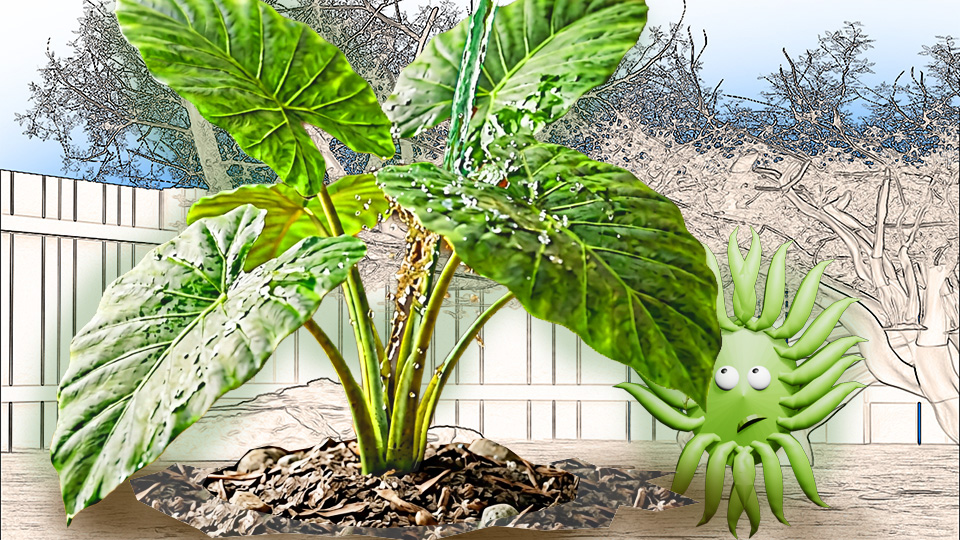
Wicket waters whenever Wicket feels like it. Wicket is a plant. The rules are different.

📚 Related Reads


Tanglewicket is part of the John D Reinhart content family. Writer, illustrator, videographer, and accidental filmmaker — find the whole story at JohnDReinhart.com.

32003

©2026 John D Reinhart / Tanglewicket.com. All rights reserved.

How Much Water Does a Garden Actually Need?

Water is the variable that makes or breaks a garden. Too little and things die of thirst. Too much and they drown in comfort. Here’s the whole picture on how much, how often, and why.

Water is the thing beginners worry about most and understand least. The questions are reasonable: How much is enough? How often? How do I know if I’ve done it right? Does rain count? What if I forget?

The answers are less complicated than the anxiety surrounding them, but they’re also more nuanced than “water every day” or “water when dry,” which are the two most common pieces of advice given and the two most likely to produce either a drowned garden or a parched one.

Here’s the complete picture on garden watering — the principles, the variables, the methods, and the single most reliable way to know whether your plants actually need water.

🌧️ The One-Inch Rule

Most vegetables need approximately one inch of water per week, delivered either by rain or irrigation. This is the baseline. Not a strict prescription, but the starting point for almost every garden watering conversation.

Why one inch: one inch of water applied to soil penetrates to roughly six to eight inches of depth, which is where most vegetable root systems are actively working. Shallow watering — a brief daily sprinkle — keeps only the top inch of soil moist, which trains roots to stay near the surface. Surface roots are vulnerable to heat, drought, and competition. Deep watering encourages roots to follow the moisture downward, producing more resilient plants.

One inch per week sounds precise. In practice, it’s a useful mental benchmark. More in hot weather, during fruiting and flowering, or for plants in containers. Less in cool, cloudy weather when plants are dormant or slow-growing.

🤔 The Variables That Change Everything

  • Soil type. Sandy soil drains fast and needs more frequent watering. Clay soil holds water longer but can become waterlogged. Loamy soil with good organic matter content retains moisture well without drowning roots. Adding compost improves any soil’s water management.
  • Weather. Hot and windy days increase evaporation dramatically. A garden that needs water every three days in mild weather may need it every day in a heat wave. Check the soil, not the calendar.
  • Plant stage. Seedlings need more frequent, lighter watering than established plants. Fruiting and flowering plants need more water than plants in vegetative growth. Mature plants with deep root systems tolerate dry spells better than young ones.
  • Mulch. A two to three inch layer of mulch around plants dramatically reduces evaporation from the soil surface. A mulched garden needs significantly less watering than an unmulched one. Mulch is the easiest water conservation step available.

🔍 The Finger Test

The most reliable watering guide is not a schedule or a formula. It’s your index finger.

Push it two inches into the soil near the plant. If the soil feels moist at that depth, wait. If it feels dry, water. This takes three seconds and is more accurate than any other method, because it tells you what’s actually happening in the root zone rather than what the weather app thinks should be happening.

The finger test defeats both overwatering and underwatering because it measures actual soil moisture rather than elapsed time since last watering. A plant watered two days ago may still have adequate moisture. A plant watered yesterday in hot wind may not. The finger knows.

💧 How to Water Well

Where water goes matters as much as how much. Watering at the base of the plant — at soil level, directed at the root zone — is more efficient than overhead watering that wets the leaves.

Wet leaves invite disease. Fungal problems — mildew, blight, botrytis — thrive in the damp conditions created by wet foliage. Watering at the base keeps leaves dry and reduces disease pressure significantly.

Water slowly and deeply. A slow, steady delivery allows water to penetrate rather than run off. Overhead sprinklers are fast but inefficient — a significant portion of the water evaporates before it reaches roots. Drip irrigation and soaker hoses deliver water directly to the root zone at a rate the soil can absorb.

🌡️ When to Water

Morning is the ideal time. Soil absorbs water before midday heat increases evaporation. Any water that reaches the leaves has time to dry before evening, reducing fungal risk.

Evening watering is the second choice — better than midday when evaporation is highest, but water left on leaves overnight encourages disease.

Midday watering is inefficient due to evaporation but not harmful. The myth that midday watering scorches leaves through a magnifying-glass effect has been debunked. It’s just wasteful, not dangerous.

🛒 The Watering Kit Worth Having

  • Adjustable garden hose nozzle — Multiple spray patterns from gentle mist to strong stream. The tool that handles every watering situation in one.
  • Watering can with rose head — For seedlings and containers. The rose breaks water into a gentle shower that doesn’t disturb soil or young plants.
  • Rain gauge — Measures actual rainfall so you know whether nature handled the week’s inch or whether you need to supplement. The cheapest data point in the garden.
  • Soaker hose — Delivers water directly to the root zone at a slow, steady rate. The most efficient watering method for garden beds.
  • Garden mulch — Reduces watering frequency by retaining soil moisture. The passive water conservation tool that keeps working while you’re doing other things.

As an Amazon affiliate, I earn from each qualifying purchase. Thank you for supporting TangleWicket.

✨ The Short Version

One inch per week, delivered deeply and at the base of the plant, in morning when possible. Adjust for weather, soil type, and plant stage. Check with your finger before watering rather than following a fixed schedule.

Mulch reduces how often you need to do any of this. Drip irrigation and soaker hoses make deep, efficient watering almost automatic.

Tom Brownthumb watered on a schedule for two seasons. His tomatoes were either drowning or parched depending on the week. The finger test changed everything.

📚 Related Reads


Tanglewicket is part of the John D Reinhart content family. Writer, illustrator, videographer, and accidental filmmaker — find the whole story at JohnDReinhart.com.

32001

©2026 John D Reinhart / Tanglewicket.com. All rights reserved.