Why Some Flowers Smell and Some Don’t

The marigolds smell. The petunias smell. The gorgeous hybrid tea rose you paid thirty dollars for smells like absolutely nothing. This is not random. Here’s what’s going on.

Tom Brownthumb bought a hybrid tea rose. The color was extraordinary โ€” a deep coral with cream edges, the kind of thing that makes you stop at the garden center and pick it up without intending to. He brought it home, planted it, tended it carefully, and when it bloomed, he leaned in for the scent.

Nothing. The flower smelled like a slightly damp afternoon.

This is not bad luck. This is plant breeding. And it explains a surprising amount about modern gardening.

๐ŸŒน Why Fragrance Got Bred Out

Flower fragrance is produced by volatile organic compounds โ€” aromatic molecules that evaporate from the flower and travel through the air to attract pollinators. Fragrance is, from the plant’s perspective, an advertisement. It is how the flower announces itself to bees and moths from a distance.

When plant breeders began developing flowers primarily for visual characteristics โ€” larger blooms, more unusual colors, longer vase life, more petals โ€” fragrance was often a casualty. The genetic traits that produce abundant petals and extreme colors are not always compatible with the traits that produce strong scent. Breeders optimized for what sells on a garden center shelf, and fragrance is hard to see from three feet away.

The result: many modern hybrid flowers are visually spectacular and nearly scentless. Old-fashioned and heritage varieties often have far more fragrance than their modern counterparts, but smaller or less dramatic blooms.

๐ŸŒผ Which Flowers Actually Smell

Reliably fragrant plants you can grow include: lavender (intensely fragrant, drought-tolerant, beloved by bees), sweet alyssum (honey-scented, low-growing, blooms for months), stock (Matthiola โ€” intensely clove-scented, especially in the evening), night-blooming jasmine (releases scent after dark), sweet peas (one of the most beloved flower scents, worth the effort of growing from seed), and old-fashioned roses โ€” particularly David Austin varieties, which were bred specifically to restore fragrance to the rose family.

Marigolds also have a scent, though “fragrant” is generous โ€” it is a pungent, resinous smell that some people love and others find overwhelming. Pollinators, interestingly, do not share the ambivalence. They visit marigolds enthusiastically regardless.

๐ŸŒ™ Evening Fragrance

Some flowers release their scent primarily at dusk and through the night, when the moths that pollinate them are most active. Four o’clocks (which open in late afternoon), evening primrose, and moonflowers all fall into this category. They are nearly scentless in full sun and intensely fragrant after dark.

A garden with evening-scented plants near a patio or window is one of the genuine pleasures of flower gardening. It is also one of the least-marketed ones, since the scent doesn’t show up in a photograph.

๐Ÿ” What to Look For When Buying

If fragrance matters to you โ€” and for many gardeners it matters more than color โ€” look for “fragrant” or “scented” in the plant description. For roses specifically, look for heritage varieties, David Austin (English roses), or old garden rose classifications. These are the ones that smell like roses used to smell.

When in doubt at the garden center, lean in and smell before you buy. This is not eccentric. This is research.

๐Ÿ›’ Gear Worth Having

As an Amazon affiliate, I earn from qualifying purchases. Thank you for supporting TangleWicke

๐Ÿ“– Related Reads


TangleWicket is part of the John D Reinhart content family. Writer, illustrator, videographer, and accidental filmmaker โ€” find the whole story at JohnDReinhart.com.

36010

ยฉ2026 John D Reinharttanglewicket.com/ โ€“ all rights reserved

The Flowers That Come Back Every Year Without Help

Some perennials are so reliable they border on rude about it. You plant them once, ignore them completely, and they come back bigger every spring. These are the ones.

There is a category of perennial that does not require your attention, your anxiety, or your apology. You plant it, it establishes, and it returns every spring with more confidence than it had the year before. It does not ask for fertilizer. It does not require winter protection. It simply persists.

These are the plants that build a garden’s backbone while the gardener is doing something else.

๐ŸŒธ Black-Eyed Susan (Rudbeckia)

The most cheerful and least demanding perennial in common cultivation. Yellow petals, dark center, blooms from midsummer to frost. It spreads slowly by self-seeding, which means a small planting becomes a larger one over a few years without any effort. It tolerates poor soil, drought, and neglect with something approaching good humor.

Plant it once and it will be there longer than you expected.

๐ŸŒบ Purple Coneflower (Echinacea)

Drought tolerant, native to North America, beloved by pollinators, and increasingly available in colors beyond purple โ€” pink, white, orange, yellow. Coneflowers establish slowly but once settled they are effectively permanent. They also self-seed, and the seedlings, once they appear, can be transplanted wherever you’d like them.

Leave the seed heads standing through winter. Birds eat them. It is the plant doing double duty.

โ˜€๏ธ Daylily (Hemerocallis)

Technically not a true lily, but that distinction can be seen as entirely academic. Daylilies bloom heavily, spread by root division (meaning the clump gets larger each year and you can eventually divide it and plant the divisions elsewhere), and ask almost nothing of the gardener. They tolerate clay soil, periodic drought, and general inattention.

The one quirk: each individual bloom lasts one day. This is not a problem because the plant produces dozens of buds in sequence, and the effect is continuous bloom for several weeks.

๐Ÿƒ Catmint (Nepeta)

Soft gray-green foliage, clouds of small lavender-blue flowers, drought-tolerant, and pollinators absolutely mob it. Cut it back by half after the first flush of bloom and it will rebloom in fall. Deer don’t eat it. Rabbits don’t eat it. The bees, however, are completely devoted to it.

It also smells pleasant, which is more than can be said for most things that are this easy to grow.

๐ŸŒผ Shasta Daisy

The classic white daisy with the yellow center, taller and longer-lived than an annual daisy, blooms in early summer and can be coaxed into a second flush with deadheading. It spreads slowly, tolerates average soil, and looks exactly like what people think of when they imagine a garden.

Tom Brownthumb planted three in his first summer. He now has nine, without having planted any of the additional six. This is the entire argument for perennials in one data point.

๐Ÿ›’ Gear Worth Having

Eden Brothers All Perennial Wildflower Seed Mix โ€” 19 perennial varieties including coneflower, black-eyed Susan, and shasta daisy. The economical way to establish a permanent backbone.

Organo Republic 16 Perennial Wildflower Seeds Mix โ€” 100,000+ seeds, 16 perennial varieties. Covers large areas and returns year after year.

Survival Garden Seeds 36-Pack Annual & Perennial Flower Kit โ€” A broad starter collection with both annuals and perennials. Plant the annuals for immediate color while the perennials establish.

As an Amazon affiliate, I earn from qualifying purchases. Thank you for supporting TangleWicket.

๐Ÿ“– Related Reads


TangleWicket is part of the John D Reinhart content family. Writer, illustrator, videographer, and accidental filmmaker โ€” find the whole story at JohnDReinhart.com.

36009

ยฉ2026 John D Reinharttanglewicket.com/ โ€“ all rights reserved

Cutting Flowers for the House Without Killing the Plant

Cutting flowers from your garden for the house is one of the genuine pleasures of growing them. Here’s how to do it without setting the plant back.

The first time Tom Brownthumb cut a flower from his own garden and put it in a vase on the kitchen table, he felt like a person who had figured something out. The flower was a zinnia. It was orange. It lasted eleven days.

What he did not know, and then learned, is that cutting the flower was also the best thing he could have done for the plant. More flowers followed. The plant, now aware that its blooms were being removed before they could set seed, kept producing.

Cutting garden flowers for the house is not a sacrifice. It is, for most plants, management. Here’s how to do it right.

โฐ When to Cut

The best time to cut flowers is early morning, before the heat of the day. The stems are fully hydrated from the overnight hours, the flowers haven’t been wilted by sun, and the blooms will last longest. The second-best time is evening. Midday, when the plant is stressed by heat, is the worst time.

Cut buds that are just beginning to open, not flowers that are fully open. A bloom that is three-quarters open at cutting will finish opening in the vase and last much longer than one that was already at peak. A fully open flower put in a vase has maybe two or three days left. A bud put in a vase has a week.

โœ‚๏ธ How to Cut

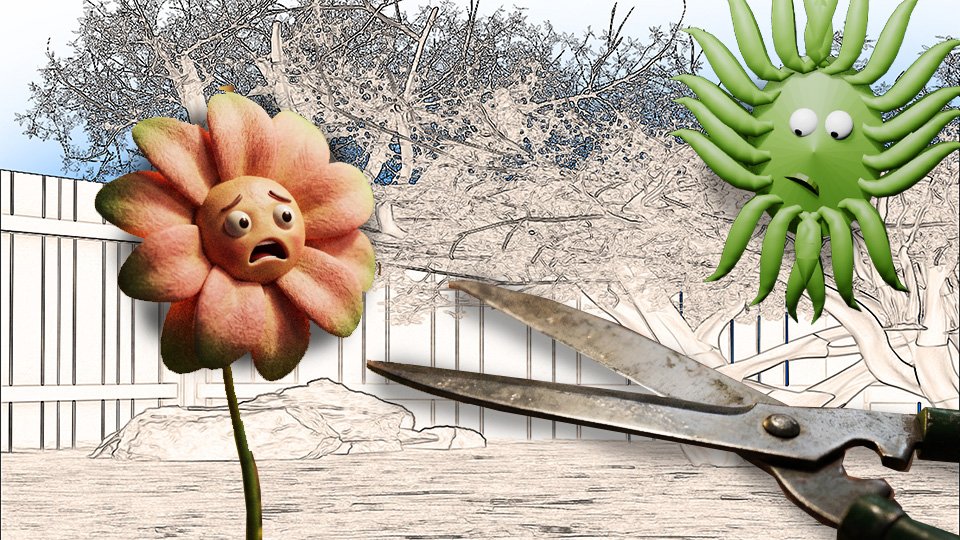
Use clean, sharp scissors or garden snips. A clean cut matters โ€” a crushed or torn stem can’t draw water efficiently, and the flower wilts early.

Cut the stem at a 45-degree angle. This increases the surface area available for water uptake and prevents the cut end from sitting flat against the bottom of the vase (which would block water absorption).

Cut longer than you think you need. You’ll trim the stem again before putting it in the vase, and having extra length gives you options for different container heights.

Put the stems immediately into a bucket of water you brought outside with you. Not into your hand, not into a pile on the ground. The moment a stem is cut, it begins drawing air instead of water. Get it into water fast.

๐Ÿ’ง In the Vase

Before arranging, re-cut each stem under water โ€” submerge the end in a bowl and make the cut. This eliminates any air pocket that formed between the garden and the vase.

Remove any leaves that will sit below the waterline. Submerged leaves rot quickly and introduce bacteria that shorten vase life dramatically.

Change the water every two days. A clean vase, fresh water, and a re-cut stem will add days to the life of most cut flowers.

๐ŸŒธ Which Flowers Cut Well

Excellent cutting flowers that grow easily: zinnias (long stems, long vase life, keep producing all season), sunflowers (dramatic, last well), cosmos (airy and delicate, re-cut stems frequently), marigolds (less traditional but long-lasting), gladiolus (elegant, tall, worth growing for this alone), and dahlias (spectacular in a vase, worth every bit of effort they require).

Plants that do not cut well: anything delicate and short-stemmed, most annuals bred purely for compact garden display, and anything with hollow stems that wilt immediately. Read the plant description โ€” “good for cutting” is often listed as a feature when it applies.

๐Ÿ›’ Gear Worth Having

Miracle-Gro for Fresh Cut Flowers, 8 oz. โ€” Extend vase life vs. water alone. Add three pumps per quart. Re-apply every two to three days.

Sow Right Seeds Large Flower Farm Collection โ€” Zinnias, Sunflowers, Cosmos & More โ€” A seed collection chosen specifically for cutting. Grow your own vase flowers from scratch.

VIVOSUN 6.5″ Stainless Steel Garden Snips โ€” Clean, sharp cuts every time. The essential tool for a cutting garden.

As an Amazon affiliate, I earn from qualifying purchases. Thank you for supporting TangleWicket.

๐Ÿ“– Related Reads


TangleWicket is part of the John D Reinhart content family. Writer, illustrator, videographer, and accidental filmmaker โ€” find the whole story at JohnDReinhart.com.

36008

ยฉ2026 John D Reinharttanglewicket.com/ โ€“ all rights reserved