
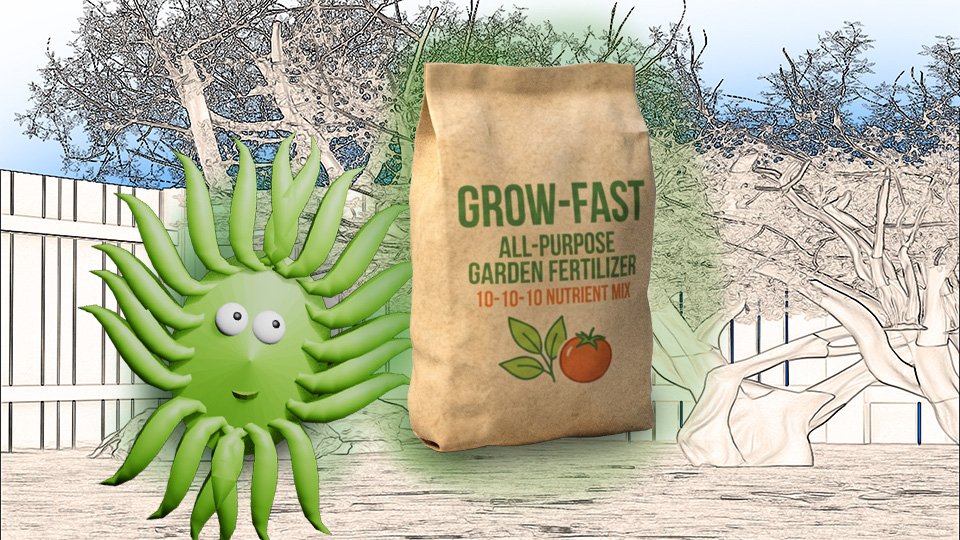
Pick up a bag of fertilizer and you will see three numbers separated by dashes: 10-10-10, or 5-10-5, or 21-0-0. These numbers are on every fertilizer product. They are also never explained.
They are, in fact, not complicated. Once you know what each number represents, you can read a fertilizer label as easily as reading a recipe — you know what’s in there and what it does.
🔢 The Three Numbers: 10-15-20
N — Nitrogen. The first number (10 in the example above). Nitrogen drives vegetative growth — leaves, stems, and the overall green bulk of the plant. A high first number means the fertilizer is heavy on nitrogen. Nitrogen is what lawn fertilizers are typically high in, and why applying lawn fertilizer to vegetables produces enormous plants that fruit poorly.
P — Phosphorus. The second number (15 in the example above). Phosphorus supports root development and flower and fruit production. A high middle number is appropriate when starting transplants (root establishment), encouraging flowering, or supporting fruiting crops.
K — Potassium. The third number (20 in the example above). Potassium supports overall plant health, disease resistance, and water regulation. It’s the maintenance nutrient — plants need it consistently but not in the dramatic spikes that nitrogen and phosphorus sometimes require.
The numbers represent percentages by weight. A 10-10-10 fertilizer is 10% nitrogen, 10% phosphorus, and 10% potassium. The remaining 70% is filler material that helps distribute the nutrients evenly.
🤔 What to Use When
- Starting seedlings and transplants: higher phosphorus (middle number). Phosphorus supports root development, which is exactly what a new transplant needs. A starter fertilizer like 10-52-10 is designed for this purpose.
- Leafy vegetables (lettuce, spinach, kale): higher nitrogen. These crops are all leaf and no fruit. Nitrogen drives exactly the growth you want.
- Fruiting vegetables (tomatoes, peppers, squash): balanced or higher phosphorus and potassium once flowering begins. Too much nitrogen on a tomato produces a spectacular plant with minimal fruit. The plant is growing leaves when it should be growing tomatoes.
- General garden maintenance: balanced fertilizer (equal or near-equal numbers) applied once or twice per season covers the bases without over-emphasizing any single nutrient.
🌱 Organic vs. Synthetic Fertilizer
Both deliver N-P-K to plants. The difference is in how quickly and how.
Synthetic fertilizers are immediately available to plants. Quick green-up, fast results, but can burn plants if over-applied, and don’t build soil health.
Organic fertilizers (compost, fish emulsion, blood meal, bone meal) release nutrients slowly as soil organisms break them down. Slower results, but they also feed soil biology and build long-term soil health. Harder to over-apply.
For most home gardeners, a combination works well: organic amendments (compost, well-rotted manure) worked into beds each season build soil health, supplemented with balanced granular fertilizer during the growing season for quick plant nutrition.
🚧 The Most Common Fertilizer Mistake
More is not better. Over-fertilizing — particularly with nitrogen — produces problems: burned roots, excessive leafy growth at the expense of fruit, increased pest attraction, and nutrient runoff into groundwater. The label rate is a maximum, not a minimum.
Soil that has been amended with compost annually needs less supplemental fertilizer than depleted soil. Test your soil before defaulting to heavy fertilizer programs.
🛒 Fertilizer Worth Having
- Balanced granular fertilizer 10-10-10 — The all-purpose starting point. Covers the basic nutritional needs of most vegetables.
- Tomato and vegetable fertilizer — Formulated for fruiting crops. Higher phosphorus and potassium ratio supports fruit production.
- Fish emulsion liquid fertilizer — Organic, fast-acting, and a broad nutrient profile. Smells exactly as you would expect. The plants don’t mind.
- Soil test kit — Before fertilizing heavily, know what your soil actually needs. Over-fertilizing a nutrient-sufficient soil is wasteful and potentially harmful.
As an Amazon affiliate, I earn from each qualifying purchase. Thank you for supporting TangleWicket.
✨ The Short Version
N is for leaves. P is for roots and flowers. K is for overall health. The three numbers are percentages. Match the fertilizer to the crop and the growth stage.
Compost builds soil. Fertilizer supplements it. Both have a role.
Tom Brownthumb once applied lawn fertilizer to his tomatoes. He grew the finest collection of tomato leaves anyone had ever not eaten.
📚 Related Reads
- Soil: The Thing Beginners Ignore and Experts Obsess Over
- Why Your Plant Is Yellowing (And What Color Tells You)
- Composting for People Who Think It’s Complicated (It Isn’t)
TangleWicket is part of the WhistleBump group – find the rest of the family at WhistleBump.com.
33003
©2026 John D Reinhart/Tanglewicket.com – all rights reserved