
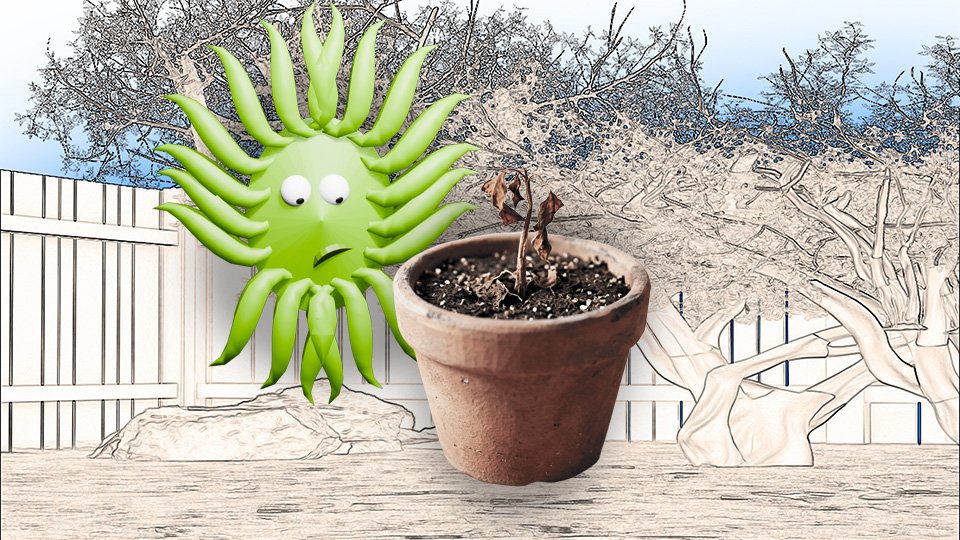
You did everything right. You read the packet. You planted the seeds at the specified depth. You watered them. You waited. And then you waited some more. And then you went out and stared at the dirt, which continued to be dirt with no visible improvement.
Seed germination failure is one of the most discouraging things in gardening because you can’t see what’s happening. The problem is underground, invisible, and apparently indifferent to your concern.
The good news: it’s almost always one of five fixable things. None of them mean you have a talent deficiency. They mean something in the conditions wasn’t quite right.
🌡️ Problem One: Temperature
Seeds germinate within specific temperature ranges. Outside those ranges they either sit dormant or rot. Most vegetable seeds want soil temperatures between 60°F and 75°F. Plant them in cold spring soil and they wait. Plant them in hot summer soil and some of them cook.
Why soil temperature matters more than air temperature: the air can be 70°F on a sunny afternoon while the soil is still 48°F two inches down. Seeds live in the soil. The air temperature is irrelevant to them.
A soil thermometer costs almost nothing and removes all guesswork. Check the soil temperature before planting. Warm soil produces germination. Cold soil produces patience and disappointment.
💧 Problem Two: Moisture
Seeds need consistent moisture to germinate. Not soggy — soggy causes rot. Not dry — dry causes dormancy. Consistently damp, like a wrung-out sponge that still has some moisture left.
The common mistake: watering once, assuming it’s handled, and then letting the soil surface dry out completely. The seed starts to germinate, the process requires water, the water disappears, and the seed gives up.
The fix: check the soil surface daily. It should feel slightly damp to the touch. A light misting is better than heavy watering, which can wash seeds deeper than intended or compact the soil over them.
🕛 Problem Three: Depth
Planting too deep is the most common depth mistake. A seed contains only so much energy. If it’s buried three inches down when it should be half an inch, it runs out of energy before it reaches light. It germinates perfectly and then dies before you ever see it.
The general rule: plant seeds at a depth of two to three times their diameter. Tiny seeds — lettuce, carrots, basil — go barely under the surface. Large seeds — beans, squash, sunflowers — go about an inch down.
When in doubt, plant shallower. A seed planted too shallow can often push through. A seed planted too deep rarely makes it.
☀️ Problem Four: Light (or Lack of It)
Some seeds need light to germinate and should be pressed onto the soil surface rather than covered. Lettuce is the most common example. Bury lettuce seeds and nothing happens. Leave them on the surface and they sprout reliably.
The seed packet specifies this, usually with the phrase “do not cover” or “light required for germination.” Read the packet. It knows things.
📅 Problem Five: Time and Patience
Different seeds germinate at wildly different speeds. Radishes: five to seven days. Peppers: fourteen to twenty-one days. Parsley: up to four weeks. Parsley will make you question everything.
Look up the expected germination time for whatever you planted before declaring failure. Some seeds are simply slow and your concern, however sincere, is not going to hurry them.
🛒 Tools That Help
- Soil thermometer — Ten dollars of certainty about soil temperature. The single most useful tool for understanding why seeds aren’t doing what they should.
- Spray bottle for misting — For gentle, consistent moisture without disturbing seeds or compacting the soil above them.
- Seed starting heat mat — Warms soil from below. Dramatically improves germination rates for warm-season crops started indoors. Peppers and tomatoes love this.
- Seed starting mix — Fine, light, and designed for germination. Heavy garden soil compacts over seeds and blocks emergence.
As an Amazon affiliate, I earn from each qualifying purchase. Thank you for supporting TangleWicket.
✨ The Short Version
Seeds don’t fail because you’re bad at gardening. They fail because one variable — temperature, moisture, depth, light, or time — wasn’t quite right.
Fix the variable. Try again. Gardening is largely a series of small experiments conducted in the dirt.
Wicket has failed to germinate several times. Wicket kept going anyway.
📚 Related Reads
- Seeds vs. Seedlings: Which Should a Beginner Buy?
- What “Direct Sow” Actually Means
- Reading a Seed Packet Without Glazing Over
TangleWicket is part of the WhistleBump group – find the rest of the family at WhistleBump.com.
30002
©2026 John D Reinhart/Tanglewicket.com – all rights reserved